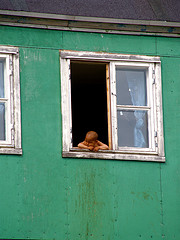
My Canada includes rights of Indigenous Peoples.
Love it or leave it! Peace.
Showing posts with label Canada. Show all posts

Saturday, March 19, 2011

Canada’s Struggle to Extinguish Aboriginal Title

Our connection to the Land is Sacred, it defines who we are as Peoples, it is our Aboriginal Title. Our laws and teachings bid us to honour and protect our connection to the Land. In the roots which bind our Peoples to the Land there is a life and a future for our Peoples.

Canada cannot understand our Sacred connection to the Land, our Aboriginal Title. It is “uncertain,” because it prevents Indigenous Peoples from viewing the Land as a commodity to be bought, sold or traded. From Canada’s perspective, our Aboriginal Title has to be changed, altered, and defined in a treaty so that it fits with Canadian laws and ideas about Land.

Canada’s strive for certainty reflects a desire that Indigenous Peoples assimilate into Canada, that we sever our connection to the Land. Canada asks that we dig up the roots connecting us to the Land and replant them through treaties. This lack of understanding and fear about our connection to the Land is what Canada strives to address through certainty.

For Indigenous Peoples, our Aboriginal Title and connection to the Land is certain, it is in the bones of our grandmothers buried in the earth, and in the blood which beats in our hearts:
Our Sacred connection to the Land is certain.

Our relationship with the Land, our Title, rests over every square inch of our traditional territories: Every rock, mountain top, stream, valley and tidal swell. This is certain.

Indigenous Peoples have the jurisdiction and responsibility to protect, access and use the Land and resources upon the Land for the benefit of our Peoples. This is certain.

Our own traditional laws and teachings grant us this certainty: As long as we maintain our Sacred connection to the Land we will continue to exist as Peoples.

Canada and B.C. have said that the purpose of treaties or modern land claims agreements is to achieve “certainty”. This booklet discusses the certainty provisions that have been suggested. In particular, a confidential document, “Certainty Summary”, which was drafted by the province.

The Certainty Summary gives a fairly clear indication of the certainty language Canada and the province will insist upon having in any treaties or land claims agreements they negotiate.

The purpose of “certainty” on the part of the federal and provincial governments is to “exhaustively and completely set forth” all aboriginal and treaty rights. Rather than simply accepting the existence of Aboriginal Title as ownership and jurisdiction over Land and resources, certainty limits and defines Aboriginal Title and Rights.

Aboriginal Title to lands and resources existed at the time that the Crown asserted sovereignty. This Title was never extinguished. This is why Crown title is uncertain and remains subject to Aboriginal Title.

There is an air of illegality about any transactions which the Crown makes or authorizes with respect to Lands and Resources. These transactions do not acknowledge that Indigenous Peoples own the Lands, and therefore violate the legal principle that “You cannot give that which you do not own.”

The Crown’s willingness to negotiate land claims requires a promise on the part of Indigenous Peoples that they will not fully practice their rights. Canada’s negotiating stance is: “We will recognize your rights, but only if you first tell us how you will exercise them, and only if you promise that your rights will not interfere with our interests.” This is certainty.

Canada’s sovereignty or ownership of Land and resources is not challenged, Canada does not have to “prove” its title. Indigenous Peoples do not get an equal promise that Canada will tell us how they will practice their rights, or that their rights will not interfere with our interests. Quite the opposite.

A modern land claim agreement is a contract between Indigenous People, Canada and the Province. Each party gives something in exchange for something. In order to gain “certainty” Canada and the Province are willing to grant a limited recognition of aboriginal title to a reduced portion of an Indigenous group’s traditional territory, in exchange for the release of all aboriginal title and rights not specifically set out in the Agreement.

Convert, Modify and Transform
The intent of the parties in achieving certainty is evident in the language proposed. Instead of the traditional “extinguishment” language (which used such phrases as “cede, release and surrender”) the language of treaties will be finessed so that it is not so blunt. Aboriginal title and rights will not be extinguished outright; Instead, they will be defined and limited out of existence. Achieving certainty will require that Aboriginal Title and Rights be “converted/modified/transformed/etc.” into treaty rights set forth in the Agreement.

Compare these definitions of the words used, all from Websters dictionary:

Extinguish, definitions include
1. “to bring to an end: to make an end of”;
2. “to reduce to silence or ineffectiveness”;
3. “to cause to be void: NULLIFY”; and
4. “to get rid of usually by payment”

Convert, definitions include
1. “to bring over from one belief, view, or party to another”;
2. “to change from one form or function to another”;
3. “to alter for more effective utilization”; and
4. “to appropriate without right”

Modify, definitions include
1. “to make less extreme: MODERATE”;
2. “to limit or restrict the meaning of…and”;
3. “to make basic or fundamental changes in often to give new orientation to or to serve a new end”

Transform, definitions include
1. “to change in composition and structure”; and
2. “to change in character or condition: CONVERT”
Certainty provisions will change all rights which aboriginal peoples have into contractual rights which have been reduced to writing, limited and defined. The impact of the proposed certainty provisions is to capture and tame aboriginal title and rights, and then place them in a cage constructed of words and legal provisions.
Certainty involves the re-definition and re-creation of aboriginal rights. This is done through clauses which
Ø convert and reduce all existing aboriginal or title rights of Indigenous Peoples’ into those contained within the Agreement;
Ø ensure that the Agreement will be the “full and final settlement” of all aboriginal title or rights;
Ø release all rights not listed in the Agreement to Canada; and
Ø exhaustively set forth all the Section 35 rights of the Indigenous group, including the manner of their exercise, and all the limitations to those rights on which the Parties have agreed.

There will be no aboriginal title or rights which survive their exclusion from the written Agreement. All aboriginal rights and title will be transformed to those of contractual or treaty-rights. Any stray rights which are not listed (for example, because of oversight, or because they were not thought of at the time of the Treaty) will not survive their exclusion from the Agreement. This means that if Canadian courts recognize new rights in the future (for example, a right to water or a commercial interest in wildlife) Indigenous groups who treaty will not be able to benefit from these rights.

Land claims agreements will be the Noah’s Arc of Aboriginal Rights: Any title or rights not on the arc and nailed down with words in the Agreement, at the time of the treaty will not survive. Aboriginal title and rights flow from the land and the historic relationship that Indigenous Peoples have had with our Lands. The legal language proposed for certainty will flood the land with Crown title and forever dam the flow of rights from the Land to the people. Crown title will replace aboriginal title. No title or rights will ever flow from the Land again. Instead, all rights will flow from the written Agreement.

Modern land claims agreements will create a double standard in which the interests of the federal and provincial Crowns and third parties are recognized. These rights will simply continue to exist, they will change and adapt over time, they will continue to live. There is no provision which releases all undefined rights or interests of Canada, B.C. or third parties to the Indigenous group. The rights of the Indigenous Peoples’, on the other hand, will be frozen and will not grow and adapt. If these rights are not written into the Agreement, they will no longer exist, they will be dead.

This is an example of how double standards will be cemented in modern land claims agreements. Crown title is perfected and recognized over all Lands, while Indigenous Title is extinguished from all areas not in the agreement.

These agreements are not fair or equal: there is no sharing. The Crown gets complete recognition of its sovereignty, its underlying title to our lands and the supremacy of its laws over our governments and People. Indigenous groups get limited recognition of title to reduced pieces of land, the right to co-manage resources (along with government and third parties interests) and self-government which is subject to Canadian and provincial laws.

Land claims agreements will explicitly contain recognition of all “third party” interests and that these are not impacted by aboriginal rights.

Interpretation: A different species of Section 35 rights
Although modern land claims will be acknowledged as treaty rights under Section 35 of the Constitution Act, 1982 which “recognizes and affirms” existing aboriginal and treaty rights, they will be a different species of Section 35 right. The benefit of having rights recognized under Section 35 is that Canadian Courts have read Section 35 to protect Aboriginal peoples and their rights.

At present, under Section 35, courts interpret treaties so that
Ø ambiguous expressions in treaties are resolved in favour of the Indians;
Ø treaty provisions are given a fair, liberal and large interpretation;
Ø the honour of the Crown is assumed when interpreting treaties (Courts assume that the Crown intended to act honourably toward aboriginal peoples and with the best interests of the aboriginal peoples in mind, while entering treaties); and
Ø any suggestion of “sharp dealing” (unfair bargaining) is not sanctioned.
These principles of interpretation will be removed from modern treaties and therefore the protective features of Section 35 will not operate. Any common law rules with respect to aboriginal or treaty rights will be replaced by the provisions of the Agreement and it is anticipated that the federal government will need to pass legislation in order to override the common law rules.
Provisions in the new treaties which will remove common law protection may include:
Ø There will be no presumption that doubtful or ambiguous expressions or terms are to be interpreted in favour of any particular Party or Parties.

Ø The Indigenous group will agree that the Crown has no consultation obligations respecting the Section 35 rights of the Indigenous group other than those obligations set out in the Treaty.

Ø The Section 35 rights set out in the Treaty will be interpreted solely on the basis of the rights set out in the treaty, without any distinction based on whether the right is a [converted/modified/transformed/etc.] aboriginal right or a new treaty right.

Any common law rules which arise from aboriginal rights cases which impose a duty on the Crown to treat aboriginal rights in a certain way, will not apply if they are not set out in the Agreement. In Delgamuukw the Supreme Court suggested that the consent of the aboriginal peoples with title would be required before certain actions or measures could be taken if these actions would have the impact of interfering with aboriginal title and the traditional uses to which the Indigenous Peoples have put their lands.

The consent of an aboriginal group to actions regarding lands over which they have aboriginal title will not apply to the new treaties unless this is specifically set out in the agreement. And, in any case, the consent, or even involvement, of the aboriginal group will only apply to those specific tracts of lands identified in the Agreement. Under Delgamuukw, consultation, compensation and, possibly consent, are required for all lands which comprise the traditional territory and title lands of the Indigenous Peoples.

Although the rights recognized under the Agreement will be called Section 35 treaty rights, they will not be afforded the same protection as Section 35 rights held by other Indigenous Peoples. These are all eliminated through the wording of the Agreement and instead the legal rules surrounding contract interpretation will apply.

Reliance
The Agreements will set forth a broad number of “reliance” provisions in which the Indigenous group will agree to “indemnify” Canada and the province should any damage come to Canada or the province as a result of stray rights having survived the Agreement. This means that the Indigenous group agree to cover the financial costs to government in the event that they are sued as a result of the Agreement.
Federal and provincial legislation will be passed in order to pass this guarantee along to third parties. Federal legislation may also indemnify the province.

Who can treaty away aboriginal title?
Aboriginal title is a collective interest, which is held in trust by all members of an Indigenous Nation. As a collective interest held by each and every member of an Indigenous Nation, aboriginal title cannot be bargained or treatied away by anything less than the full consent of all the Indigenous Peoples who collectively hold this title. A majority vote (no matter how high the percentage) cannot give one group the ability to extinguish the title and rights of all of the Indigenous Peoples who hold title.

Canada and the province recognize the illegality of negotiating an agreement which purports to extinguish aboriginal title without the full consent of all of the Indigenous Peoples’ concerned. The collective nature of aboriginal title means that no Band or group of Bands/communities can treaty for Lands which belong to an entire Nation, or that no group of people within one Nation or Band/community has the right to treaty for the extinguishment of the aboriginal title and rights of those members of their Nation/community who do not give their full consent.

The legal uncertainty of the current process is heightened by the fact that Indigenous citizens are not fully or meaningfully involved or informed in the negotiations of modern land claims agreements. The collective nature of aboriginal title (which means that title is shared by all members of a Nation) creates an area of uncertainty about all treaties entered into without the full consent, knowledge and participation of each and every citizen of the Indigenous Nation. The same legal principle applies: “You cannot give that which you do not own.” No vote or ratification process is valid to authorize any group to enter into a treaty without the full consent of their people.
The province has proposed to deal with this area of uncertainty by exacting a legal promise from the Indigenous group that they have the right to enter into the Agreement on behalf of all of their people.

If individual Indigenous people do not agree with the terms of the Agreement and bring law suits in the future (claiming, for example, that parts of their traditional territories were not included in the settlement land, or that the Indigenous government had no right to extinguish their title over their traditional territory) the Indigenous group will agree that they will cover any costs to Canada and B.C. The result of this clause is that Indigenous peoples will be suing other Indigenous peoples and any dollar settlement will come from the Indigenous peoples themselves,not the government.

Compensation for Past Wrongs
Modern land claims agreements will represent the “full and final settlement” between the parties, including of past wrongs. The Indigenous group will agree not to pursue any legal claims against Canada or B.C. with respect to any past wrongs. The proposed wording is that
The Indigenous group will release Canada and British Columbia from any claims that it may have had prior to the Treaty regarding any interference or infringement of the Indigenous group’s Section 35 rights, and any claims under Canada’s “specific claims” policy.

The Supreme Court of Canada, in Delgamuukw, stated that aboriginal title has an economic component and that government will be liable to provide compensation in the event of an abrogation or breach of aboriginal title. This clause would preclude the Indigenous group from bringing any legal actions relating to compensation for the value of the lands and resources taken from their territories. Canada and the province will not have to pay compensation for their past extraction of resources (which is in the billions of dollars for most areas), or the spoilage of habitat, lands and resources which they have been responsible for. All past claims for compensation, and any future claims for compensation, are all reduced into the terms of the Agreement.

Breach
Modern land claims agreements will contain language in which all parties agree not to challenge the “validity or enforceability” of the Agreement. This means that if the Indigenous group in the future do not think that the Agreement was a fair deal, they have agreed not to go to Court to challenge it.

Certainty language will also require that the parties agree that if one or more parties breaches the agreement and do not keep the promises they made under the Agreement, the other Parties must keep their promises.
A breach of the Treaty by any Party will not relieve any other Party from its obligations under the Treaty.

Indigenous Peoples who have entered into treaties with Canada share the common complaint that Canada has steadfastly refused to honour the terms of the treaty or the promises it has made. Canada maintains that Indigenous Peoples have ceded their aboriginal title through treaties (and therefore that Crown title is absolute over those lands) while not honouring the promises which it made. This clause suggests that the Indigenous group may be forced to honour their agreements (ceding aboriginal title and rights to all areas not included under the Agreement) if Canada and B.C. do not honour the obligations they made. For example, if B.C. decides that it cannot afford to make the payments required under the treaty, or if it minimizes the co-management agreement provisions of the agreement, the Indigenous group will not get their lands and rights back.

Summary
The net impact of the “certainty” provisions sought by Canada and B.C. will be to create a double standard with regard to title and interests in the land. Canada, the province, and third parties have their rights and interests recognized and protected. These rights are not defined or in any way limited by the Agreement. The Indigenous group, on the other hand, have all of their rights reduced to the written word of the Agreement.

These certainty provisions are far more restrictive than any of the “extinguishment language” which has been used in other modern land claims agreements to date.

The goal of the Union of British Columbia Indian Chiefs is to support the work of our people, whether at the community, nation or international level, in our common fight for the recognition of our aboriginal rights and respect for our cultures and societies. Our goal, the goal of the people, has been to give the aboriginal people of BC a voice strong enough to be heard in every corner of the world. Read other articles by Union of British Columbia Indian Chiefs, or visit Union of British Columbia Indian Chiefs's website.

Monday, December 27, 2010

To honor the lives and attain justice for the children that were brainwashed, raped and murdered under the Canadian Government’s Residential School Policy of genocide against Native people.

Wednesday February 10, 2009 at 10:00AM

Silent march beginning at the Department of Indian Affairs building in Hull , on to the Supreme Court of Canada, then to the parliament and ending at the Prime Minister’s office.

Each step of the way the Brief entitled;

Human Rights Violation

Government Sponsored Identity Theft

Through

Residential Schools

And

Its continued application within

The Canadian Judicial System

Will be presented to the respective authorities

If you can support this, please attend or help is in whatever way you can.

Help restore Humanity!

Mohawk Traditional Council ~ Kahnawake Mohawk Territory

mohawktraditionalcouncil@gmail.com

450-638-4357

Urgent Brief Concerning; Human Rights Violation Government sponsored Identity theft Through Residential Schools And its continued application within The Canadian Judicial System Mohawk Traditional Council 2 3 Native People have identified that Prime Minister, Steven Harper’s apology RE residential schools is hollow and means nothing, due to the fact that; It does not identify the true crimes that were committed. It does not identify responsibility for those crimes. It does not offer justice by charging those responsible for carrying out such heinous crimes against children. Which exemplifies for Natives, that there is no justice in the Canadian system. By making a one-time-lump sum payment to what the Canadian Government identifies as the survivors, is a clear denial of responsibility for the multigenerational problems it has caused, such as with the Duplessi Orphans of Quebec. This clearly identifies that each successive generations are also survivors, which in turn incurs more responsibility upon the government than a measly dollar amount and an apology. The Canadian judicial system is still carrying out the objective of the residential schools, of oppressing Native identity. 4 Excerpts from Prime Minister, Steven Harper’s official apology for Canada’s genocidal acts against humanity. June 11, 2008 “Two primary objectives of the residential schools system were”; “To remove and isolate children from the influence of their homes, families, traditions and cultures” And “To assimilate them into the dominant culture.” and “To kill the Indian in the child” “ Today, we recognize that, has caused great harm, and has no place in our country” Prime minister of Canada, Steven Harper 5 Residential Schools As an official Canadian Government policy, targeting children in collaboration with the Catholic Church enforced through the British Crown’s law, via the RCMP and the courts, constitutes an evil conspiracy of the highest order. The Conspiracy; “To kill the Indian in the child” on such a massive scale as to have this illegally forced, more often than not, at gun point, upon all native people, constitutes GENOCIDE. The methodology of genocide; “To remove children from their homes” is premeditated kidnapping, in the 1st degree. “To isolate them from their homes” is premeditated forcible confinement, in the 1st degree. 6 “To isolate children from their families” is premeditated dehumanization of the human spirit, in the 1st degree. “To remove and isolate children from their traditions and cultures” is premeditated identity theft, in the 1st degree. “To assimilate them into the dominant culture” is premeditated brainwashing and reprogramming with malicious intent to cause a deep-rooted psychological and physiological conflict, purposely forcing a multigenerational breakdown of the Native identity, in the 1st degree. “To kill the Indian in the child”, upon one child, is premeditated murder in the first degree. To systematically carry this out upon an entire race IS PREMEDITATED GENOCIDE, IN THE 1ST DEGREE. For the Prime Minister of Canada to admit “this policy of assimilation was wrong” and 7 officially apologize for its evil effects on the Native People of Turtle Island, clearly exemplifies how an already corrupt and archaic system of people, institutions, regional police, regional courts, provincial police, provincial courts, RCMP, federal courts, provincial and federal governments, CSIS, the catholic church and the British Crown, sank all society to the darkest depths of sub-human behavior. By singling out children, kidnapping them through the said institutions, raping, murdering and brainwashing the survivors with the evil intent of re-establishing the assimilated minds of these young helpless victims, back into Native societies, proves the Government’s intention was to have these children more easily accept the second phase of the assimilation process, the forcible (through murder) insertion of the elected band/tribal council system. 8 This is nothing more than the early Roman practice of kidnapping the children of their enemies, raising them and teaching them the ways of Roman Court politics, then return them back into their societies with their poisoned minds, with the intent of destroying their traditional political systems. This is done, by establishing a military maneuver of a “fifth column” such as what Adolph Hitler used in Nazi Germany, what the United States and Canada uses, and is a common practice of any military state. One must ask ones-self; what is the difference between our two identities to make this violent sub-human assimilation process necessary? The answer to this is like the difference between night and day. Where Canada is a paternal military state that wages war on 9 everyone who is not like them and on everything, including our Mother Earth. Contrarily, Native society is a matrilineal society, which wages peace to establish a living harmony with all living things. Native identity is to be true human beings, living in balance with our Mother Earth, protecting her from any destructive force that may attack and destroy her. Clearly these two identities clashed, for the non-native identity and culture is controlled by paternalistic democracy, which protects capitalism, which in turn thrives off the exploitation and destruction of our Mother Earth’s non-renewable resources. Thus, when Democracy and capitalism are combined, it creates the lethal abomination of “DEMOCRAPITALISM” which kills our Mother Earth by creating laws that legalize her destruction and other 10 laws making it illegal for human beings to protect her from the said destruction. The Native people know that, “killing yourself is no way to make a living” this is not our identity, nor will it ever be our identity. We are not destructors of the land like the non-native society. Not even the forced reprogramming of our identity through residential schools will get us to change from protecting our Mother Earth, to the non-native identity of destroying her! Prime Minister, Steven Harper’s official apology is an admittance that it is illegal to try and steal anyone’s identity, to force identity change or to oppress native identity from being expressed, through whatever methods of oppression that may be used to illegally force such a change, EG Canadian judicial system. 11 Therefore, in order for the positive step of Canada’s apology for the residential school system to mean anything, that which is identified as being wrong with the policy must be corrected. Meaning, all archaic policies that still continue to steal, oppress and prevent native identity from being expressed must be officially stopped by the Canadian Government. In light of this apology which identifies that it is wrong to try and oppress Native identity, it is not only hypocritical but also illegal for any level of court system to continue to criminalize any native person who engages in the expression and manifestation of our identity of protecting and defending our Mother Earth from the destruction of her vital resources. Not only will this benefit the Native people by ensuring that our identity is recognized and protected by law, it will also free the 12 Canadian people from the psychological damage that has been done to them as a result of their government being an oppressor and instigator of genocide, which devolved everyone’s humanity in order to accept such archaic, subhuman behavior. Recognizing Native identity will also benefit all humanity and our Mother Earth. Through official government policy and law, it will provide human beings with the only actual tangible mechanism to fight against the GLOBAL CLIMATIC DISASTER that is facing us all. Therefore, it is now your responsibility to inform every level of court within the Canadian judicial system, that it is illegal to keep doing what your Premier already apologized for and stop arresting any Native person for defending the land and to stop putting bail conditions on them restricting them from returning to the land in protest. Which would effectively prevent the Native people from exercising our TRUE NATIVE IDENTITY. Do act accordingly. In Peace and Friendship. Secretary, Stuart Myiow Mohawk Traditional Council Box 531, Kahnawake Mohawk Territory J0L 1B0

Monday, October 18, 2010

Canada's 'Duty to consult' Indigenous Nations cont'd ...

http://www.elliotlakestandard.ca/ArticleDisplay.aspx?e=2798304

Open letter to Elliot Lake mayoral candidates from SRFN chief

Letters To The Editor

On behalf of Serpent River First Nation council and citizens, I send you greetings and trust that you are working diligently to win the confidence of the citizens of Elliott Lake so they will put their support behind your respective visions for Elliot Lake. We wish you both luck and commend you for your efforts to make Elliott Lake a good place to flourish and prosper.

As elected chief of the Serpent River First Nation, I know the experiences that you aspire to cultivate in leadership are those only public service brings. Regardless of our political stripes, we all serve for a similar reason – to ensure that our citizens are provided with effective representation and the highest quality of life possible.

As you know, the Serpent River First Nation is not just a neighbouring community to Elliot Lake. The region where the city is located is integral to our traditional territory and we have strong historical, geographical, harvesting, cultural and spiritual ties to Elliot Lake. Since time immemorial prior to contact, we walked these lands - the land owned our people. Today, our existing Aboriginal and treaty rights are recognized and affirmed in section 35 of Canada's constitution.

When we set our fishing nets in Elliot and Dunlop lakes on Oct. 1, 2009, we were not protesting. We wanted to show our neighbours of our rightful access and jurisdiction to Crown lands. We also know that the issue of colliding interests must be reconciled. Serpent River First Nation is now asking the question - where does the Elliot Lake leadership stand on the need for First Nation dialogue on plans to assert further access for First Nation benefit and gain?

The Supreme Court of Canada has consistently reaffirmed that both, federal and provincial governments have a legal duty to consult with us and provide accommodation regarding our Aboriginal and treaty rights. Since Elliot Lake is a creation of the province of Ontario, Elliot Lake must recognize, respect that First Nation rights and interests must be accommodated before new developments can proceed. Ontario is currently at the table - Elliot Lake leadership should now start asking questions.

Given the importance of the outcome of this election for all of us, I want to invite you both to a public town hall discussion about how you, as mayor, would like Elliot Lake to work with us - essentially to meet issues head-on with the goal of collaborative policy questions and proposed outcomes.
For example, where can a successful joint relations committee take our communities? What is your intent to ensure that Crown resources serve the economic interests of both Serpent River First Nation and the City of Elliot Lake? What might be the best options for the First Peoples of the Serpent River headlands and the City of Elliot Lake in proceeding with a broad heritage study that seeks to establish protection status of sites and routes of the original people in and around Elliot Lake? I want to discuss the City of Elliot Lake's plans regarding the cottage lot program and the potential legal challenges to the Elliot Lake Act.

In closing, I believe that it is in the best interests of both of our communities and citizens that we have a public dialogue about how we intend to move forward as friends and neighbours in a mutually beneficial, peaceful and prosperous co-existence – in the true spirit and intent of our Robinson Huron Treaty, 1850. I look forward to your timely response.

Isadore Day,
Wiindawtegowinini,
Chief of the Serpent River First Nation

Thursday, August 19, 2010

'The duty to consult' ... Financial Post, National Post

'The duty to consult'

Julius Melnitzer, Financial Post · Wednesday, Aug. 18, 2010

Aboriginal rights issues are cutting a wide swath in the energy sector, touching everything from resource extraction to liquefied natural gas facilities, transmission lines and pipelines. So much so that one industry pundit has maintained that all of Canada's new supply sources for oil and gas have at some point been "tied up" with aboriginal rights claims.

Among the projects affected are the $50-billion oil sands development in Alberta, the $500-million Kitimat liquefied natural gas terminal project in British Columbia, and the Maritime pipelines project.

There's also the multi-billion-dollar Mackenzie Valley natural gas project on which may hinge the future of Canada's north. Originally expected to come online in 2007, it remains uncertain as to when gas will begin to flow.

Environmental concerns, political squabbling, cultural differences and divisions among the aboriginal groups became so acute that Imperial Oil stopped work in April 2005, citing "unreasonable demands" from the Deh Cho. The impasse ended later in the year, but only after the federal government promised $500-million to address aboriginal social and economic concerns.

The Supreme Court of Canada's "consultation trilogy" in 2004 and 2005 has been the prime catalyst for the emergence of aboriginal rights issues. The trilogy -- which consists of legal cases involving the Haida, Taku River Tlingit, and Mikisew Cree -- established that both federal and provincial governments had a duty to consult with aboriginal groups before making decisions that might adversely affect their asserted but unproven aboriginal rights.

"The duty to consult is triggered when the Crown knows or should know that its actions might affect constitutionally protected rights," says Wally Braul, an aboriginal and environmental lawyer at Fraser Milner Casgrain's Calgary office. "And the courts have made it clear that consultation is not just about blowing off steam. It's a results-oriented process that includes both information and response components focused on accommodating the competing interests at stake."

That means governments cannot -- without prior consultation -- grant or renew licences, leases or other privileges to third parties or take action on their own that could infringe on potential aboriginal rights. While governments can delegate the implementation of their duties to third parties in the private sector, the ultimate burden of ensuring that meaningful consultation occurs remains with the Crown. What is meaningful depends on the circumstances, including the strength of the aboriginal claim and the seriousness of the adverse effects on that claim.

"With the trilogy, resource harvesters became aware that aboriginal rights had a direct impact on the way they did business," says Tom Isaac, an aboriginal rights lawyer at Mc-Carthy Tetrault's Vancouver office.

Indeed, allocation of Crown rights and the development process proceed fairly simultaneously nowadays. Currently it is rare for Canadian governments to allocate resources without consideration of how the resource will be developed and whether the development will affect aboriginal rights.

In the real world, this means that the Crown off-loads the consultation process to those seeking the grants to access resources.

"Applicants requiring government approval for a permit or licence may not know if aboriginal consultation is required," says Ken Clark, an aboriginal lawyer at Lang Michener's Vancouver office. "They may also not know what aboriginal groups should be consulted; when the consultation should occur; what information they should provide; how long the consultation process might take; whether the consultation will result in approval; what changes might be required, and whether an approval, if granted, might be set aside by a court." So unless they get the right advice, project developers may find themselves on a slippery slope.

"In the last few years, the adequacy of the consultation process has been challenged in court by various aboriginal groups," Mr. Clark explains. "A frequent result is a determination that the consultation process was not adequate, and a direction that the Crown go back and consult some more."

Companies wishing to avoid dilemmas of this kind must make sure not only that they get the delegated consultation process working properly, but also that the Crown has done its job by putting a proper process in place.

"After all, the Crown bears the ultimate responsibility for ensuring that consultation occurs, but if the process is one that isn't fair and transparent and doesn't withstand judicial scrutiny, it's the developer who suffers the consequences," Mr. Isaac says.

The courts have made it clear that they would prefer to see some kind of policy guiding the consultation process, but governments have not been quick to respond.

"The feds tried and created some interim guidelines but they remained interim and are not generally followed," Mr. Clark says. "Alberta has made an effort but without much success. Earlier this summer, Saskatchewan did come up with guidance that looks reasonable and providesclarityandcomes closest to the kind of regulatory regime that the Supreme Court of Canada has been referring to in its decisions."

Meanwhile, the legal rulings are evolving rapidly.

"It's very important to align a project with the very latest guidance that comes from the courts," Mr. Braul says.


At the same time, First Nations' and other aboriginal groups are increasing their expectations and becoming more sophisticated in their approach to the issues. "It's no longer just a matter of respecting aboriginal rights and traditions," Mr. Isaac says. "Rightly or wrongly, there is a growing expectation of some form of economic benefit flowing from projects to First Nations."

The practical challenge for the resource and other sectors, then, is how to measure, manage and mitigate the risk in the consultation and accommodation process.

"Every jurisdiction in the country is different in its approach, every sector is different, and the First Nations, Metis and Inuit are all different in their approaches. So you're not going to get cookie-cutter answers, and that won't change until we get the kind of political leadership that will lend greater clarity to the process," Mr. Isaac says.

Read more: http://www.nationalpost.com/todays-paper/duty+consult/3411973/story.html#ixzz0x4aMrETB

Thursday, June 24, 2010

Can Little Corpses Forgive, or Be Apologized To?
Awakening from Canada's Big Lie
by Kevin D. Annett
www.hiddenfromhistory.org

Make the lie big, make it simple, keep saying it, and eventually they will believe it .
Adolf Hitler, 1925

You have to admit it, but the Canadian establishment has to be pretty nervous these days, if you judge by its unfolding circus in Winnipeg.

I expected at first for the Indian residential school "Truth and Reconciliation" (TRC) bandwagon to do its usual photo op and move on, after the typically expensive fanfare and self-congratulations. But no. The lies and obscenities are growing on what they feed on. Hot on the heels of the TRC posturing there is descending on Winnipeg in a single week 280 world religious leaders, followed by a United Nations human rights delegation, and finally, Queen Elizabeth herself - all of them bubbling with praise for Canada's human rights record towards aboriginal people.

Liz Windsor, true to form, will have the unmitigated gall to unveil a statue of herself in Winnipeg on July 3, just before laying a piece of soil from Runnymede, where Magna Carta was signed, at the foundation of Canada's new "human rights museum", which hosts not a single exhibit of the genocide of Indians in Canada.

Some of us wrote to Queen Liz over two years ago, asking her to identify where the children who died at the hands of her church and state are buried. She never replied. But William Combes, who survived torture and starvation at the Catholic Indian residential school in Kamloops, B.C., wants the Queen to also explain what happened to ten native children who were last seen in her company in the fall of 1964, and disappeared forever.

"The Queen showed up at the school one day in September, she and her husband, when I was eleven" described William on my radio program last year.

"All of us kids at the school were given clean clothes and breakfast that day for her royal visit. We went down to a big field near Dead Man's Creek and had a picnic with her after she did her tour. After that, she went off with seven boys and three girls, and we never saw any of them, ever again."

The truth is that the topsoil has finally blown off the mass graves of more than 50,000 children who never returned from residential school, and those responsible are doing their damnedest to distract all of us from those revealed, tiny corpses. And what better decoy to use than an appeal to our deep collective need, as the guilty party, to be forgiven and to get off lightly for our crime?

A Big Lie can only be believed if those hearing it need to believe it: and in this case, Canadians' need for self-absolution for their century-long slaughter of innocent children has been our primary response to the residential schools revelation.

Every politician and Bishop in Canada knows this, and they've crafted their rhetoric and actions accordingly. But there's an odd sort of panic in the way they're going about it, using such overkill in their ridiculous stacking and censoring of their "official inquiry" into themselves that it suggests a deep and underlying uncertainty and fear by church and state.Undoubtedly this explains how thickly Ottawa and its church partners have been laying it on in Winnipeg since June 16, relying on a smiling Governor General, church celebrities, and the Queen herself to push the Big Lie that every crime, and every corpse, can be swept away with the right words.

The trouble with overkill is that it produces the opposite of its desired effect. For even residential school survivors who came to the TRC believing in it have come away hurt, angry and determined to be heard in some other forum.

Shirley, a Cree woman from northern Saskatchewan, told me,

"Nobody would pay our way to Winnipeg, and there was twenty of us who wanted to speak. So I came all by myself and I waited three days, and I never got to be heard. Except for a few token Indians, the whites were running the show, and they kept looking at me suspiciously and said I had to let them see my statement before I could speak. I said to them, I just want to speak, I don't have it written out, and they just snubbed me after that."

Peter Yellow Quill, an Anishinabe traditional chief who helped lead an anti-TRC protest outside the event, said afterwards,

"People themselves kept raising the whole missing children thing. They kept saying, 'We need help finding our dead relatives.' They were just ignored. There weren't court reporters present so everyone could see it wasn't even a proper hearing. I think the government people are just exposing themselves and they have no way out, really, and it worries them."

Voices like Shirley and Peter never reach "mainstream" Canada or the world, thanks to the loyal compliance of the media in shutting them out. A total of eight different news agencies refused to report our anti-TRC protest in Winnipeg, or quote natives who called for an international inquiry into genocide in Canada, including the CBC, the Globe and Mail, the Winnipeg Free Press, CTV, the Canadian Press and even ostensibly "radical" news agencies like Rabble and Canadian Dimension magazine.

"It was a total media blackout on us, by everybody" commented one protester.

"The only reason reporters would call me up would be to find out what we were doing that day, probably to tell the feds or the cops. But they'd never do a story on us."

All of this, of course, is a sign of the impact the voices of the living, and the dead, are having on churches and a government which, like the Vatican itself, have run out of options as they stand finally exposed as mass murderers and serial child rapists.

My problem these days is less with the criminals - for they are, after all, ultimately just corporations in damage control - and more with the masses of Canadians, beginning with "progressives" of every hue, who stand by with absolute non-interest regarding the greatest crime and cover-up in our history.

Awakening from a lie, particularly a huge and historical one, is always difficult. But when so many "activists" across Canada studiously shun our rallies at churches demanding that the corpses of children be returned, or that child rapists in high places be arrested and tried, then one wonders what has happened to the soul and the conscience of our people.

After years of acting in the wilderness to expose and undo the Canadian genocide, our efforts are finally igniting a response around the world, especially in the recent formation of an eight-nation International Tribunal into Crimes of Church and State - a body that will be confronting the Pope in September and convening local non-governmental tribunals throughout the fall in Europe and on this continent.

In the meantime, it is incumbent on all Canadians to at least loosen their mental and spiritual subservience to the Big Lie and Criminal Conspiracy called Christian Canada - and shift their allegiance away from a murderous Crown and Church to a new social order that some have called a Republic of Kanata.

Stay tuned.


.........................................................................................................................

Kevin Annett is a community minister, author and award-winning film maker who lives in the downtown eastside of Vancouver, Canada. He is a co-founder of The International Tribunal into Crimes of Church and State, and can be heard every Monday at 1 pm (pacific time) on his program "Hidden from History" at www.coopradio.org .

ph: 386-323-5774
260 Kennedy St.
nanaimo, B.C. Canada V9R 2H8

Read and Hear the truth of Genocide in Canada, past and present, at this website: www.hiddenfromhistory.org , and watch Kevin's award-winning documentary film UNREPENTANT on the same website.

UNREPENTANT: Kevin Annett and Canada's Genocide
- Winner, Best Foreign Documentary Film, Los Angeles Independent Film Festival, March 2007, Best Director of a Foreign Documentary, New York Independent Film Festival, October 2006
- Winner, Best Canadian Film, Creation Aboriginal Film Festival, Edmonton, 2009


“Kevin is more deserving of the Nobel Peace Prize than many who have received it in the past.”
- Dr. Noam Chomsky
Institute Professor Emeritus
Massachusetts Institute of Technology

"As a long time front line worker with the Elders' Council at the Downtown Eastside Women's Centre, I stand behind what Kevin Annett is trying to do for our people. The genocide that continues today and which stemmed from the residential schools needs to be exposed. Kevin Annett helps break the silence, and brings the voice of our people all over the world."
Carol Muree Martin - Spirit Tree Woman
Nisgaa Nation

"I gave Kevin Annett his Indian name, Eagle Strong Voice, in 2004 when I adopted him into our Anishinabe Nation. He carries that name proudly because he is doing the job he was sent to do, to tell his people of their wrongs. He speaks strongly and with truth. He speaks for our stolen and murdered children. I ask everyone to listen to him and welcome him."
Chief Louis Daniels - Whispers Wind
Elder, Turtle Clan, Anishinabe Nation
Winnipeg, Manitoba

Thursday, June 17, 2010

The TRUTH about Canada: Child asks "WHY?!"

Canada's court-ordered, internationally monitored 'Truth and Reconciliation Commission'into the 'Indian' Residential Schools has just begun. All Canadians need to understand that these were not just 'schools', but a government designed policy for a means of destroying the culture, customs, heritage and birthrights of Indigenous Peoples. In particular, the schools were planned by Canada's government "to take the land out of the Indians hands". (Egerton Ryerson, 1847) The 'Indian' Residential Schools were just one of Canada's weapons of GENOCIDE against Indigenous Peoples who had, and have legal title to the lands and resources of Canada.

The struggle continues for Indigenous Peoples of 'Kanata' to reclaim their birthright - Aboriginal Rights and Title to the lands of Canada - a say in development and a share in the revenues from the land. Indigenous Peoples also struggle to overcome the horrific personal legacies of Canada's 'Indian' Residential Schools - the traumas of over 100 years of chronic abuse and neglect, separation from family and culture, and the losses of friends and relatives who died or 'disappeared' in the schools.

Over 50,000 Indigenous children died or disappeared in Canada's 'Indian' Residential Schools, and their fates and burial places remain a mystery as their graves are unmarked and sometimes hidden: Unmarked and mass graves of these children exist all across Canada.
NOTE: See sidebar, and see previous articles here, esp. Globe and Mail.
http://grannyrantson.blogspot.com/search/label/%27Indian%27%20Residential%20Schools
and SEE DOCUMENTARY FILM
UNREPENTANT: CANADA'S GENOCIDE

http://www.cbc.ca/canada/manitoba/story/2010/06/16/man-truh-reconcilation-commission-foster-care.html#socialcomments

Boy, 11, slams residential schools legacy
Last Updated: Wednesday, June 16, 2010 | 9:28 PM CST Comments134Recommend235
CBC News
Justice Murray Sinclair, chair of the Truth and Reconciliation Commission of Canada, speaks during a sharing circle in which persons affected by residential schools shared their experiences. Justice Murray Sinclair, chair of the Truth and Reconciliation Commission of Canada, speaks during a sharing circle in which persons affected by residential schools shared their experiences. (John Woods/Canadian Press)

An 11-year-old boy stole the spotlight at the opening day of the Truth and Reconciliation Commission hearings into the tragedy of Canada's residential schools.

The former foster child, who turned up to ceremonies at The Forks in Winnipeg on Wednesday, told CBC News that members of his family still suffer from the aftershocks the federal government's former policies had on his grandparents and elders.

He cannot be identified because he's a former ward of the child-welfare system — a system he says continues to remove children from their homes and places them in care where they are sometimes subjected to abuse.

'I want a good explanation why all our elders went to residential schools.'— Former Manitoba foster child, 11

In Manitoba, recent data from the provincial children's advocate shows there are more kids in state care than ever before, most of them spread across a number of regional child-welfare authorities throughout the province.

"When I was a baby, like two years old, I was taken away from my Mom to a foster home," the boy said. "And still nothing has changed. They might do something today for residential schools but nothing's changed.

"Well, some kids are still in foster homes, still kids are still being treated bad and you cannot take away what happen to those people that went to residential schools," he said.

He wondered why the government wanted residential schools to exist in the first place, given their legacy of damage and trauma.

"That doesn't, what you call, make sense — like why would they do that?," the boy said. "And still, still, still today, our grandfathers and grandmothers — our elders — are still sad about what happened," he said.

"I want a good explanation why all our elders went to residential schools."
Stories note loss of language

About 150,000 First Nations, Inuit and Metis children were forced to attend the government and church-run schools over much of the last century. The last one closed outside Regina in 1996. About 85,000 former students are still alive.
Jack Beardy, 65, leans against his cane during the Truth and Reconciliation Commission's opening ceremonies in Winnipeg on Wednesday morning. Jack Beardy, 65, leans against his cane during the Truth and Reconciliation Commission's opening ceremonies in Winnipeg on Wednesday morning. (John Woods/Canadian Press)

The $60-million truth commission, meant to expose and expiate the pain and suffering caused by the policy, was part of a landmark deal reached with survivors who had filed a class-action lawsuit against Ottawa and the churches that ran the schools.

Others also shared their experiences — some in private, some in public — with those at the commission charged with recording their stories for a national public archive.

Robert Joseph, from British Columbia, told the commission he was sexually abused by two people as a young student. He said he used to hide under his blankets and dream about his family, whom he was not allowed to see.

Leanne Sleigh, from Alberta, told the commission she felt worthless after attending a residential school where she was sexually abused.

Mary Simon, head of Canada's largest Inuit group, said she was made to feel ashamed of her culture at a day school in northern Quebec. She said she had her hand strapped whenever she spoke her language.
Healing and forgiveness

While many spoke of their trauma and anger toward the government and those who ran the schools, others, such as Rev. Guy Lavallee from St. Laurent, Man., spoke of the need for healing and forgiveness.

Lavallee, a Catholic priest who is Metis, said he understands why people are upset.

"I think that animosity has been in the minds [and] hearts of survivors for many years now," he said. "They have the opportunity to express themselves fully here."

All Canadians need to take part in the commission's work, he said.

It is expected that more than 5,000 people, including former students, leaders of aboriginal organizations, church groups and members of the general public will attend the event during its four days in Winnipeg.

The commission has the ability to record as many as 600 statements from survivors during its time in the city.

By noon Wednesday, about 50 people had given one.


AND SEE MORE ...
http://www.cbc.ca/canada/manitoba/story/2010/06/16/man-truh-reconcilation-commission-foster-care.html#socialcomments


Read more:
http://www.cbc.ca/canada/manitoba/story/2010/06/16/man-truh-reconcilation-commission-foster-care.html#socialcomments#ixzz0r6vlJSLw

Wednesday, February 10, 2010

Natives died in droves as Ottawa ignored warnings

Tuberculosis took the lives of students at residential schools for at least 40 years


------------------------------------------------------------------
GRANNYNOTE: AS CANADA'S COURT-ORDERED, UN-SUPERVISED 'TRUTH AND RECONCILIATION COMMISSION' TRIES AGAIN IN 2010 TO BEGIN ITS VVORK, A REVIEVV OF THE HEINOUS FACTS ... THE TRUTH OF CANADA'S ACTIONS ... IS NECESSARY.

PLEASE DISTRIBUTE THIS INFORMATION TO ALL CANADIANS
-----------------------------------------------------------------

Globe and Mail investigation

BILL CURRY AND KAREN HOWLETT

From Tuesday's Globe and Mail

April 24, 2007 at 1:30 AM EST

OTTAWA — As many as half of the aboriginal children who attended the early years of residential schools died of tuberculosis, despite repeated warnings to the federal government that overcrowding, poor sanitation and a lack of medical care were creating a toxic breeding ground for the rapid spread of the disease, documents show.

A Globe and Mail examination of documents in the National Archives reveals that children continued to die from tuberculosis at alarming rates for at least four decades after a senior official at the Department of Indian Affairs initially warned in 1907 that schools were making no effort to separate healthy children from those sick with the highly contagious disease.


-----------------------------------------------------------------------
GRANNYNOTE: IN 1901, IT BECAME CANADIAN POLICY TO SEGREGATE PEOPLE VVITH TUBERCULOSIS FROM OTHER PEOPLE TO AVOID THE SPREAD OF THE DEADLY DISEASE. NO SUCH EFFORTS VVERE MADE TO PROTECT THE CHILDREN IN CANADA'S 'INDIAN' RESIDENTIAL SCHOOLS. THEY DIED IN NUMBERS SO HIGH THAT IT COULD NOT HAVE HAPPENED BY NORMAL TRANSMISSION. IT VVAS DELIBERATE MASS MURDER PERPETRATED BY THE GOVERNMENTS OF CANADA AND THE CATHOLIC, ANGLICAN AND UNITED CHURCHES OF CANADA.
-----------------------------------------------------------------------

Peter Bryce, the department's chief medical officer, visited 15 Western Canadian residential schools and found at least 24 per cent of students had died from tuberculosis over a 14-year period. The report suggested the numbers could be higher, noting that in one school alone, the death toll reached 69 per cent.

With less than four months to go before Ottawa officially settles out of court with most former students, a group calling itself the Friends and Relatives of the Disappeared Residential School Children is urging the government to acknowledge this period in the tragic residential-schools saga – and not just the better-known cases of physical and sexual abuse.

Last week, Liberal MP Gary Merasty wrote to Indian Affairs Minister Jim Prentice asking the government to look into the concerns. Mr. Prentice's spokesman, Bill Rogers, told The Globe that departmental officials have been asked to meet with native groups.

Some of their stories, including tales of children buried in unmarked graves beside the schools, are told in a new documentary by Kevin Annett, a former United Church minister, titled Unrepentant: Kevin Annett and Canada's Genocide.

Mr. Annett, as well as some academics, argue that the government's handling, combined with Canada's official policy of removing children from their homes for 10 months each year to attend distant schools, does indeed fit the United Nations definition of genocide.

The UN definition, adopted after the Second World War, lists five possible acts that qualify as genocide, of which killing is only one. The fifth act is described as “forcibly transferring children of the group to another group.”

But transcripts of debates in 1952 of the House of Commons external affairs committee, reviewed by The Globe, show public servants advised politicians not to enshrine a definition of genocide into law, despite Canada's promise internationally to do so.

In 2000, four years after the last residential school closed, the government finally adopted a limited definition of genocide, excluding the line about forcible transfer of children. But courts have rejected native claims of genocide against Ottawa and the churches because Canada had no law banning genocide while the schools were operating.

“It's another crime,” said Roland Chrisjohn, a professor of native studies at St. Thomas University who has written extensively on the subject. “Canada can't define genocide to suit its own purposes.”
(See http://www.dominionpaper.ca/original_peoples/2006/10/12/like_weeds.html )

Few argue that the policy was genocidal in the Nazi sense of deliberately killing people. Rather, the focus was on killing native culture in the name of assimilation, said John Milloy, a Trent University professor.

“The purpose of the [federal government's] policy is to eradicate Indians as a cultural group,” said Prof. Milloy, who has had more access to government files on the subject than any other researcher. “If genocide has to do with destroying a people's culture, this is genocidal, no doubt about it. But to call it genocidal is to misunderstand how the system works.”

Whatever the definition, there is no disputing the deadly swath tuberculosis cut through native schools.

Dr. Bryce followed up his 1907 report with a second one two years later, this time on the toll TB was taking in Alberta residential schools. He recommended that Ottawa take over responsibility of the schools from church control.

The Globe has uncovered letters in the archives showing that many others issued similar warnings. Just a few months after Dr. Bryce's 1909 report, the department's Indian agent for Duck Lake, Sask., wrote to his Ottawa colleagues: “The department should realize that under present circumstances about one-half of the children who are sent to the Duck Lake boarding school die before the age of 18, or very shortly afterward.”

Another document published in 1914 shows Dr. Bryce's findings were accepted by Duncan Campbell Scott, the most influential senior Indian Affairs official of the period. “It is quite within the mark to say that fifty per cent of the children who passed through these schools did not live to benefit from the education which they had received therein,” Mr. Scott wrote in an essay.

But one of the documents obtained by The Globe reveals Mr. Scott's department rejected the doctor's recommendations because the government did not want to upset the churches that ran the schools.

The residential schools were an extension of religious missionary work. They started receiving federal support in 1874 as part of Canada's campaign to assimilate aboriginals into Christian society by obliterating their language, religion and culture. Well over 100,000 native children passed through the schools, most of which were closed in the mid-1970s.

The tuberculosis problem was symptomatic of the deplorable living conditions for the thousands of children uprooted from their communities and placed in the care of strangers. Tuberculosis is one of the deadliest infectious diseases, entering the body through breathing and infecting the lungs. It can then spread to the central nervous system, bones and joints, according to the Canadian Lung Association.

In May, 1930, at the Shubenacadie Residential School in Nova Scotia, officials were coping with an outbreak of tuberculosis seven months after the facility opened. But it was the arrival several years later of James Paul, a new student with an advanced case of tuberculosis, that raised the ire of the school's visiting physician.

“Evidently somebody has mistaken our residential school for a TB sanatorium,” D. F. MacInnis says in a letter to Indian Affairs.

Later, Dr. MacInnis wrote to the school principal: “We are apparently getting all the advanced TB cases and syphilities in the three provinces shipped into our school and apparently there is no way left for us to keep them out. It is very unfair to the children who are clean and well.”

Although most students from this period are no longer alive, some who attended later recall sharing sleeping quarters with dying children.

“I've known some students that died there and I don't know how they died. All we know is we had their funeral service,” said Harry Lucas, 66, who attended Christie Indian Residential on Vancouver Island from 1948 to 1958.

“There were quite a few grave sites there that I always questioned. We were able to sleep next to a person that was dying. They didn't put them away in separate rooms. That was always kind of spooky for me.”

Ted Quewezance, the executive director of the National Residential School Survivors Society, attended Gordon Residential School and St. Philip Residential School in Saskatchewan from 1960 to 1969. He said he has spoken to thousands of former students across Canada.

“We'd see [funerals] monthly,” he said. “We were never able to ask what they were. It's no different right across the country. There's even some graves unmarked. Kids were buried at the school, but now we're talking about how do we bring our survivors home?”

The Friends and Relatives of the Disappeared Residential School Children claims thousands of children are buried in unmarked graves near the schools. Many of their stories are contained in the documentary by Mr. Annett ( Link: Unrepentent ) who says he was ousted from the United Church in 1995 after raising concerns about the church's residential-school history.

(The United Church rejects Mr. Annett's version of events, pointing to a three-week termination hearing in which several witnesses said he was a confrontational figure who was a poor manager of his Port Alberni church.)

James Scott of the United Church said there is relatively little solid information on deaths at the schools because archivists have been so focused on researching claims of living former students.

“My sense is that the more we find out about [the schools], the deeper our understanding of the catastrophic impact of the residential schools on aboriginal people, on their families and their culture,” he said.

Bede Hubbard of the Canadian Conference of Catholic Bishops said the Roman Catholic Church, which ran most of the schools, noted that previous research has shown the churches made many pleas to Ottawa for more money to improve standards.

“I didn't realize that the rates of tuberculosis were that high. In the 1930s, tuberculosis was rampant in Canada itself, so it shouldn't be surprising then that it was also a problem in the residential schools.”

Prof. Milloy of Trent University is the only outsider to have accessed the locked vault of Indian Affairs records through his role as a senior researcher for the 1996 Royal Commission on Aboriginal Peoples.

In 1999, he published his research in a book titled A National Crime: The Canadian Government and the Residential School System. Prof. Milloy expressed discomfort with the campaign of Mr. Annett and others to introduce language such as genocide and “aboriginal holocaust.”

What government and church records do show, he said, is that the deaths were primarily due to the policy of paying churches on a per-capita basis to run the schools. Numerous letters indicate that because of the funding policy, churches would admit sick children and refuse to send ailing ones home. Pleas to the department for more funding fell on deaf ears.

“That's why there's so many kids sleeping in so few beds in so many dormitories across the country,” Prof. Milloy said. “It has absolutely nothing to do with the idea of ‘Let's get them sick with tuberculosis and wipe them out as a species on the earth.' It's the fact that the feds won't spend any money on this, and that's what it leads to.”

As for Dr. Bryce, the man who first sounded the alarm, he was shuffled to another department. The position of chief medical officer was terminated and the government appears to have made no further effort to gather statistics on deaths at the schools. Ottawa did not take over control of all schools until 1969.

In 1922, after he retired, Dr. Bryce penned a diatribe against Ottawa's lack of response to his reports.

The title: The Story of a National Crime.

A HISTORY OF SHAME

EARLY YEARS

Started before Confederation as part of religious missionary work, residential schools originally focused on replacing aboriginal beliefs with Christianity. More than 70 per cent of the schools were run by the Roman Catholic Church; the rest by the Anglican and United Churches.

FEDERAL INVOLVEMENT

The federal government started funding residential schools in 1874, using American Industrial Schools as the model for introducing manual labour and agricultural skills to natives. To encourage children to use English and French, they were physically punished for speaking their own languages.

OTTAWA TAKES OVER

There were 72 residential schools in 1948 and 9,368 students. Ottawa took full control of the schools in 1969 and most were closed during the 1970s. The last school shut its doors in 1996.

THE LEGACY

Stories of physical and sexual abuse began to emerge in the 1980s, and became major news when Manitoba Chief Phil Fontaine, now the National Chief of the Assembly of First Nations, went public with his story of sexual abuse as a student.

In April of 2006, Ottawa reached a $1.9-billion agreement with former students to settle their class-action lawsuits out of court and compensate for the loss of language and culture. Further money has been set aside to settle claims of physical and sexual abuse. Students have until Aug. 20 to accept the package. Bill Curry

RAISING CONCERN

January, 1919

Duncan Campbell Scott, a senior Indian Affairs official, talks about the inadequacy of the school buildings in a memorandum to Arthur Meighen, then Superintendent General of Indian Affairs. “They were unsanitary and they were undoubtedly chargeable with a very high death rate among the pupils.”

December, 1920

A report to the Commissioner of Indian Affairs says 33 students at the Sarcee school near Calgary are afflicted with tuberculosis.

February, 1925

W.M. Graham, Indian Commissioner for Saskatchewan, says in a letter to Mr. Scott: “We will have to do something to stop this indiscriminate admission of children without first passing a medical exam. ... I quite often hear from the Indians that they do not want to send their children to school as it is a place where they are sent to die.”

February, 1925

Russell T. Ferrier, Superintendent of Indian Education, writes to Indian commissioners and agents, saying each child should be pronounced fit by a medical officer before being admitted to a school. “When a pupil's health becomes a matter of concern soon after admission, the consequent parental alarm and distrust militates against successful recruiting.”

March, 1932

The Department of Indian Affairs announces that as a result of spending cutbacks, it cannot authorize admitting children with tuberculosis to a sanatorium or hospital unless the patient requires “care for relief of actual suffering.” Karen Howlett

Original source. www.theglobeandmail.com

Natives died in droves as Ottawa ignored warnings


-----------------------------------------------------------
GRANNYNOTE: THE GOVERNMENT OF CANADA IS ATTEMPTING TO CONTROL THE TRUTH AND RECONCILIATION COMMISSION BY CONTROLLIN ITS FUNDS AND BY STACKING THE COMMISSION VVITH GOVERNMENT/CHURCH-FRIENDLY APPOINTEES.

VVILL CANADIANS ACCEPT THE VVHITEASH?
DO VVE VVANT TO KNOVV THE REAL TRUTH?

Tuesday, January 19, 2010


Inuit ChildWhen the Vancouver 2010 Winter Olympic Games kick off next month, an Aboriginal symbol will be representing the event. The Games' logo is a contemporary inukshuk, a stone sculpture used by Canada's Inuit people as directional landmarks, which organizers say symbolizes friendship and hope. But hope is one thing many Aboriginal youth in Canada appear to lack, as suicide continues to occur at alarming rates, leading to crisis-like situations in some communities.
Suicide rates have declined in Canada through the years but not in Aboriginal communities, though there is great variation among communities. Suicide rates are five to seven times higher for First Nations youth than for non-Aboriginal youth, and rates among Inuit youth are among the highest in the world, at 11 times the national average. Some spectulate that the problem is actually worse, as stats don't usually include all Aboriginal groups.
Many factors may be contributing to these high rates, including isolation, poverty and lack of adequate housing, health care, social services and other basic amenities. The blog Sweetgrass Coaching, written by Richard Bull, also blames the pain and helplessness that resulted from colonization:
“You can’t understand Aboriginal suicide without looking at colonization. We, as Indigenous people, must realize that we did not have sky-high suicide rates before the European invasion (contact is too clean a word for what actually happened).
When Canadian society says we’re sick that’s like a psychopathic killer complaining to someone he’s tried to strangle repeatedly that she should do something about the marks on her neck and see a psychiatrist about her recurrent nightmares and low self-esteem.”
Specifically, some bloggers point to Canada's residential schools, a federally-funded system run by churches that removed Aboriginal children from their families and communities to help them assimilate into Euro-Canadian cultures. From the 19th century until the 1970s, more than 150,000 Aboriginal children were required to attend these Christian schools. It was later revealed that many of these children endured physical, emotional and sexual abuse. In June 2008, Prime Minister Stephen Harper apologized on behalf of the Canadian government and its citizens for the residential school system.
Anishinawbe Blog by Bob Goulais says the multi-generational effects of residential schools must not be underestimated.
“Many residential school survivors and their families have no identity beyond their church and what they learned in school. With no identity and without acceptance, they are banished to the margins of society. Although this generation might be more accepting – with access to more social programs and numerous political, legal and rights-based victories – the damage from the past generations has been done. Parents don’t know how to be parents. Families don’t know how to Love…
…For far too many youth, suicide is the ultimate way out. We’re seeing that more in more in remote, northern communities. This is truly the saddest commentary. I can’t imagine how bad life must be for a twelve year-old Cree boy to hang himself at the recreation centre swing-set. To not have the Love he needs… to not have hope. To know that he hasn’t been the first and he won’t be the last.”
To help combat suicide among Aboriginal youth, the Web site Honouring Life Network, funded by Health Canada, was launched in April 2008. It contains resources for youth and youth workers, a blog and personal stories from Aboriginal youth, among other things. In this personal story a young man talks about how his older brother's death led him to contemplate taking his own life.
“On the second anniversary of his death, I just couldn’t feel like missing him anymore. I got up really early in the morning and was walking to the picnic shelter by the lake. This other guy had hung himself there not long before. I felt like I wanted the lake to be the last thing I saw.
My neighbour was out though and started talking to me and I guess he could tell something was wrong. He kept talking to me and talking to me and then he woke up my parents. I never actually told them what I was going to do but they knew somehow. It was a big shock to all of us and it woke us up.
We started to get into the traditional healing; like my dad and I will do a sweat lodge with the other men. I’m not going to talk about that because it’s private. And my mom does the whole thing with burning sage and sweetgrass, which kind of stinks up the house but that’s okay I guess because she’s more like my mom again.”
Last fall, the Honouring Life Network announced a video contest, where Aboriginal youth were encouraged to submit a short video related to suicide prevention and awareness. The entries can be viewed on their YouTube channel; the winning entry is entitled “Choose life”:

Other youth are also working to help fight this growing problem. In 2006, Steve Sanderson, an Aboriginal youth cartoonist, wrote and illustrated a comic book called “Darkness Calls” to highlight suicide among Aboriginal youth. Revolving around a teen named Kyle, the story is also available as a video. In the blog Stageleft, the blogger discusses 12 other Aboriginal youth who are making a difference, and were rewarded for doing so, including his daughter Charlotte:
“I feel very safe in saying that not one of the 12 people on the stage lived the lives they have lived, or did the things that they have done, so they could get an award…Charlotte has been concerned with Aboriginal youth suicide rates, the rate of suicide in the Aboriginal community is many times higher than the national rate, and the rate of suicide within the Inuit community is the highest in Canada. To help bring attention to this she, and 4 other Aboriginal youth, walked from Duncan BC to Ottawa speaking at community centres, youth detention facilities, friendship centres, municipal councils, and to every politician that would listen to them.”
A 2009 UNICEF Canada report on Aboriginal children's health states that suicide intervention and prevention can only be successful by taking into account the interconnected relationships between culture, community and environment. Whatever the approach, the blog Rebel Youth says Aboriginal youth, like all Canadian youth, deserve a future.
“Over 50% of Aboriginal people are under 23. Canadian youth justified by being deep enraged by treatment of Aboriginal peoples by the Canadian ruling class; the attack on Aboriginal youth is an attack on all youth.
Aboriginal youth need a future. A future free from racism, a future with a good paying job, a future with land or proper compensation for land use. A future with rights to universal education right up to and including post-secondary education. A future with good housing. A future without racist police brutality and racial profiling. A future with a dream. A future that is a reality.”

Photo of Inuit Child by wili_hybrid on Flickr, Creative Commons.

3 comments


  • Suicide is not about dying, but about stopping the overwhelming pain that is associated with colonization.
    In Canada, we are currently into the fifth devastating wave of colonization. First, it was disease; secondly, relocation and the establishment of the reservation system; thirdly, the theft of rights and criminalization of culture; then, the residential school experience; and now, social services.
    Understanding that colonization is still happening and is not just part of our past is key to healing our communities from within.
    Thank you for your article.


  • This is a very interesting article, I relate it to indigenous cultures here in Mexico. The way they had to leave their own faith and beliefs to “enter a society”. It is sad that in the end they are not still a part of it.
    Thank you for your article!


  • The suicide statistic is something we learn in school and have to deal with, but its always to accept facts that are so disturbing.
    A well written and thoughtful description of some of the problems native Canadians face. Thanks Juhie.

My Canada includes rights of Indigenous Peoples.
LOVE IT OR LEAVE IT!
Peace.

Two Row Wampum Treaty

Two Row Wampum Treaty
"It is said that, each nation shall stay in their own vessels, and travel the river side by side. Further, it is said, that neither nation will try to steer the vessel of the other." This is a treaty among Indigenous Nations, and with Canada. This is the true nature of our relationships with Indigenous Nations of 'Kanata'.