'The duty to consult' ... Financial Post, National Post
'The duty to consult'
Julius Melnitzer, Financial Post · Wednesday, Aug. 18, 2010
Aboriginal rights issues are cutting a wide swath in the energy sector, touching everything from resource extraction to liquefied natural gas facilities, transmission lines and pipelines. So much so that one industry pundit has maintained that all of Canada's new supply sources for oil and gas have at some point been "tied up" with aboriginal rights claims.
Among the projects affected are the $50-billion oil sands development in Alberta, the $500-million Kitimat liquefied natural gas terminal project in British Columbia, and the Maritime pipelines project.
There's also the multi-billion-dollar Mackenzie Valley natural gas project on which may hinge the future of Canada's north. Originally expected to come online in 2007, it remains uncertain as to when gas will begin to flow.
Environmental concerns, political squabbling, cultural differences and divisions among the aboriginal groups became so acute that Imperial Oil stopped work in April 2005, citing "unreasonable demands" from the Deh Cho. The impasse ended later in the year, but only after the federal government promised $500-million to address aboriginal social and economic concerns.
The Supreme Court of Canada's "consultation trilogy" in 2004 and 2005 has been the prime catalyst for the emergence of aboriginal rights issues. The trilogy -- which consists of legal cases involving the Haida, Taku River Tlingit, and Mikisew Cree -- established that both federal and provincial governments had a duty to consult with aboriginal groups before making decisions that might adversely affect their asserted but unproven aboriginal rights.
"The duty to consult is triggered when the Crown knows or should know that its actions might affect constitutionally protected rights," says Wally Braul, an aboriginal and environmental lawyer at Fraser Milner Casgrain's Calgary office. "And the courts have made it clear that consultation is not just about blowing off steam. It's a results-oriented process that includes both information and response components focused on accommodating the competing interests at stake."
That means governments cannot -- without prior consultation -- grant or renew licences, leases or other privileges to third parties or take action on their own that could infringe on potential aboriginal rights. While governments can delegate the implementation of their duties to third parties in the private sector, the ultimate burden of ensuring that meaningful consultation occurs remains with the Crown. What is meaningful depends on the circumstances, including the strength of the aboriginal claim and the seriousness of the adverse effects on that claim.
"With the trilogy, resource harvesters became aware that aboriginal rights had a direct impact on the way they did business," says Tom Isaac, an aboriginal rights lawyer at Mc-Carthy Tetrault's Vancouver office.
Indeed, allocation of Crown rights and the development process proceed fairly simultaneously nowadays. Currently it is rare for Canadian governments to allocate resources without consideration of how the resource will be developed and whether the development will affect aboriginal rights.
In the real world, this means that the Crown off-loads the consultation process to those seeking the grants to access resources.
"Applicants requiring government approval for a permit or licence may not know if aboriginal consultation is required," says Ken Clark, an aboriginal lawyer at Lang Michener's Vancouver office. "They may also not know what aboriginal groups should be consulted; when the consultation should occur; what information they should provide; how long the consultation process might take; whether the consultation will result in approval; what changes might be required, and whether an approval, if granted, might be set aside by a court." So unless they get the right advice, project developers may find themselves on a slippery slope.
"In the last few years, the adequacy of the consultation process has been challenged in court by various aboriginal groups," Mr. Clark explains. "A frequent result is a determination that the consultation process was not adequate, and a direction that the Crown go back and consult some more."
Companies wishing to avoid dilemmas of this kind must make sure not only that they get the delegated consultation process working properly, but also that the Crown has done its job by putting a proper process in place.
"After all, the Crown bears the ultimate responsibility for ensuring that consultation occurs, but if the process is one that isn't fair and transparent and doesn't withstand judicial scrutiny, it's the developer who suffers the consequences," Mr. Isaac says.
The courts have made it clear that they would prefer to see some kind of policy guiding the consultation process, but governments have not been quick to respond.
"The feds tried and created some interim guidelines but they remained interim and are not generally followed," Mr. Clark says. "Alberta has made an effort but without much success. Earlier this summer, Saskatchewan did come up with guidance that looks reasonable and providesclarityandcomes closest to the kind of regulatory regime that the Supreme Court of Canada has been referring to in its decisions."
Meanwhile, the legal rulings are evolving rapidly.
"It's very important to align a project with the very latest guidance that comes from the courts," Mr. Braul says.
At the same time, First Nations' and other aboriginal groups are increasing their expectations and becoming more sophisticated in their approach to the issues. "It's no longer just a matter of respecting aboriginal rights and traditions," Mr. Isaac says. "Rightly or wrongly, there is a growing expectation of some form of economic benefit flowing from projects to First Nations."
The practical challenge for the resource and other sectors, then, is how to measure, manage and mitigate the risk in the consultation and accommodation process.
"Every jurisdiction in the country is different in its approach, every sector is different, and the First Nations, Metis and Inuit are all different in their approaches. So you're not going to get cookie-cutter answers, and that won't change until we get the kind of political leadership that will lend greater clarity to the process," Mr. Isaac says.
Read more: http://www.nationalpost.com/todays-paper/duty+consult/3411973/story.html#ixzz0x4aMrETB
Showing posts with label Haudenosaunee Six Nations. Show all posts
Showing posts with label Haudenosaunee Six Nations. Show all posts
Thursday, August 19, 2010


Thursday, August 12, 2010
Myths and truths about the 'Iroquois':
Pre-Iroquois and Iroquois evolution in Southern Ontario
Prologue: Apologies and invitations
I write this blog/article accompanied by my sincere apologies to my many Haudenosaunee* ('Iroquois') friends of the Six Nations, for some of its tone is very hurtful to them and even savage. It is, unfortunately, in part the harsh truths about the myths taught to and learned by generations of Canadian schoolchildren and indeed all of the people of Southern Ontario and Canada for over two centuries now. It is time the myths were exposed, and the truths were told, and this article attempts to do so in a way that can be understood by students and the general public across Ontario and Canada.
In this first draft, there may well be some errors in fact, some references missing, etc., and I respectfully invite readers to inform me of these via blog comments or email (grannysaga@gmail.com). I will seek to verify and correct for accuracy and provide appropriate sources, from both documentary ('European')and oral (Indigenous/Aboriginal) traditions, as new or more accurate information becomes available to me.
In this first draft also, I hope only to provide enough of a re-orientation of perspective on the 'Iroquois' to generate such discussion, even public controversy, to begin the process of public re-education in Ontario and Canada - 'doing a 180'(degree shift) as I have experienced it myself over the past four years of association with the intelligent, strong and kind people of the Six Nations. Though I am an educational researcher myself (M.A.Sc. Psychology, UW 1982, retired 2007), I do not claim to be an 'objective' source because good scientists and researchers know that no human being ever is. Those who claim to be 'entirely objective' are attempting to deceive you. Good researchers lay out their biases upfront, allowing readers to include that in their consideration. I am sharing what I have read, heard, seen and experienced and the conclusions I have come to myself. I openly admit that in doing so my motivation to persuade people to see what I believe is the truth, so that readers also experience 'a 180' degree shift in perspective.
Background: Global myths about the 'Indians' of Canada
1)We own Canada because we beat the 'Indians' in war
There were no 'Indian' wars in Canada/British North America.
The Indigenous/Aboriginal Nations were never conquered by us - neither by the French nor by the British. We did not "win" the rights to the lands of Canada.
Indigenous Nations were mostly our allies in battle, and still are to this day.
We - France/Britain/British North America - made peace treaties with Indigenous Nations* in
Canada, beginning with the Two Row Wampum Treaty of Alliance*.
In becoming a nation, Canada assumed full legal responsibility for those peace treaties.
The treaties stand as law in Canada to this day, repeatedly upheld and clarified by the Supreme Court of Canada, and forming the basis for current 'land claims' negotiations among other issues.
The harsh truth about the myths
As a child of the '60's I recall, as do most former school children in Southern Ontario throughout the 19th and 20th centuries, being taught that the 'Iroquois' were a fierce, aggressive, frightening and murderous people in the history of Southern Ontario. We were told that their 'real' home is in the (implied aggressive) United States in New York, and that they first came to British North America/Canada from New York only because the British brought some of them here in 1784 after the 'American Revolution' (War of Independence). While Britain/Canada had needed and used their fighting prowess, the tone of the teaching and learning of Southern Ontario schoolchildren for the two centuries following that time has always been that it was somewhat to be regretted that the British/Canadians had found it necessary to ally themselves to such savage people, and entirely regrettable that they ever arrived in 'Canada'.
The reason for the negative tone toward them was ostensibly because in Canada they stood out as being strong ("aggressive"), continuing their 'savage' ways by making war on peaceful aboriginal nations, whose 'real' home was Southern Ontario, most notably that they 'destroyed' the Huron (Wendat/Ouendat/Wyandotte) community entirely by slaughtering them to extinction, and by burning associated Catholic priests ("Martyrs") at the stake.
The truths
First of all, the people called the 'Iroquois' are in fact the Haudenosaunee people of the Five/Six Nations - the 'people of the long house', Hau-de-no-sau-nee. 'Iroquois'
1) Let's start at the myth of 1784 as the date of 'arrival' of the Haudenosaunee people of the Six Nations.
http://www.springerlink.com/content/q03h7101v0668w2u/
Iroquoians become recognizable in the archaeological record of southern Ontario about A.D. 500, with the appearance of Princess Point sites and maize agriculture in the lower Grand River valley. After A.D. 1000, Iroquoians lived in longhouse villages situated in the interior, north of Lake Erie, Lake Ontario, and the St. Lawrence River. This synthesis of the Iroquoian occupation of southern Ontario prior to European contact focuses on origins, settlement patterns, demography, subsistence, and sociopolitical organization. It highlights the significant contributions to Iroquoian archaeology that have been made by government and private consulting archaeologists over the last two decades.
(Bold and underline emphases added.)
http://foundlocally.com/Hamilton/local/Info-CityHistoryIndians.htm
The first humans, the Clovis people, arrived in Niagara Region almost 12,000 years ago, around the time of the birth of the Falls, when the land was tundra with spruce forests. These nomadic hunters camped along the old Lake Erie shoreline, in small dwellings, and left little behind except chipped stones, likely used to hunt caribou, mastodons, moose and elk.
By 9,500 years ago deciduous forest covered southernmost Ontario, supporting wildlife like deer, moose, fish and plants, enabling small groups to hunt in the winter, coming together into larger groups during the summer, to fish at shorelines and at the mouths of rivers.
About 2,000 years ago, the Woodland Period brought Iroquois culture in southern Ontario. These peoples began agriculture based on crops of corn, bean and squash, which supported a boom in population and a rich culture with small palisaded villages in which extended families occupied individual longhouses. They developed ceramics technology and forged strong inter-village alliances.
By the time the European explorers and missionaries arrived in the early 1600s, the Iroquoian villages had elected chiefs and were allied within powerful tribal confederacies. The Neutral Indians were the leaders of a group of ten tribes of the Iroquois Nation. Other tribes included the Seneca, Mohawk, Oneida, Onondaga, Cayuga, Huron, Petun, Erie and the Susquehannock. The French explorers , gave this Indian tribe the name "Neutrals", because of their position and status as peace keepers between the warring Hurons and Iroquois. Unfortunately, inter-tribal warfare was made worse by the intrusion of the Europeans.
http://www.nefac.net/anarchiststudyofiroquois
The traditional society of the Rotinonshón:ni (Iroquois), "The People of the Longhouse," was a densely settled, matrilineal, communal, and extensively horticultural society. The Rotinonshón:ni formed a confederacy of five nations.Generations before historical contact with Europeans, these nations united through the Kaianere'kó:wa* into the same polity and ended blood feuding without economic exploitation, stratification, or the formation of a centralized state.
A work in progress ... to be continued ...
granny
NOTES:
* I encourage readers to find additional resources of their own. However, I caution you that accounts written by our U.S. friends will refer only to the 'Iroquois' within their boundaries, indicating that the Five/Six Nations resided below the Great Lakes. Canadian resources are, thus, preferred for information about the locations of the Haudenosaunee people within the boundaries of present day Canada. Also, today's legal realities are somewhat different above and below the border. U.S. resources are, however, just as valuable as Canadian ones for information about laws, customs, etc. Readers are encouraged to apply critical thinking skills and to 'consider the source' as well as the content.
For comparison and consideration, two (of several possible) maps of the location of the Five Nations:
http://wpcontent.answcdn.com/wikipedia/commons/thumb/b/b2/Iroquois_5_Nation_Map_c1650.png/320px-Iroquois_5_Nation_Map_c1650.png
http://www.library.upenn.edu/exhibits/rbm/kislak/lands/fivenationsmapd.html
* Haudenosaunee is also written Rotinonshón:ni. Such differences are attributable to the task of translating an oral language (Mohawk) to a written phonetic one. For example, the beginning sound in their language is somewhere between our 'r' and 'h' sounds. Likewise, other sounds are somewhere between 't' and 'd', 'k' and 'g', etc., leading to some identification confusion for non-Mohawk speakers.
* I personally use the terms "Indigenous" (natural, of this land)) and "Nations" respectfully. Canada uses 'Aboriginal' (meaning out of or from the original people) and still refers to them as 'Indian' in some law and policy documents, so those terms appear here too in certain contexts, but they are not preferred. In Canada we do not tend to call them 'tribes' as in the U.S. Prior to European contact, they were various Nations of people, with local, inter-local and global trading practices and laws, treaties, religions, villages, homes, families, leadership and legal organizations, etc. There is nothing in Indigenous nor Canadian law that has changed that legally to this day: Canada's 'Indian' Act that sought to do so is widely recognized to be not legal, and is proposed for massive changes or extinction* itself. It has not yet been tested in the Supreme Court of Canada. The Canadian government would suggest that 'negotiations' are necessary.
Clearly, I am taking a political position on this issue, but one based soundly on past decisions of the Supreme Court of Canada. granny
* Two Row Wampum
* Also Gayanashagowa The Great Law of Peace that joined the five nations - Mohawk, Oneida, Onondaga, Cayuga, Seneca - into one Confederacy as the Haudenosaunee:
http://en.wikipedia.org/wiki/Great_Law_of_Peace
Historians once thought the Iroquois Confederacy started in the 1500s, but a more recent estimate dates the confederacy and its constitution to between 1090 and 1150 CE. These estimates were based on the records of the confederacy leadership and astronomical dating related to a total solar eclipse that coincided with the founding of the Confederacy.
Pre-Iroquois and Iroquois evolution in Southern Ontario
Prologue: Apologies and invitations
I write this blog/article accompanied by my sincere apologies to my many Haudenosaunee* ('Iroquois') friends of the Six Nations, for some of its tone is very hurtful to them and even savage. It is, unfortunately, in part the harsh truths about the myths taught to and learned by generations of Canadian schoolchildren and indeed all of the people of Southern Ontario and Canada for over two centuries now. It is time the myths were exposed, and the truths were told, and this article attempts to do so in a way that can be understood by students and the general public across Ontario and Canada.
In this first draft, there may well be some errors in fact, some references missing, etc., and I respectfully invite readers to inform me of these via blog comments or email (grannysaga@gmail.com). I will seek to verify and correct for accuracy and provide appropriate sources, from both documentary ('European')and oral (Indigenous/Aboriginal) traditions, as new or more accurate information becomes available to me.
In this first draft also, I hope only to provide enough of a re-orientation of perspective on the 'Iroquois' to generate such discussion, even public controversy, to begin the process of public re-education in Ontario and Canada - 'doing a 180'(degree shift) as I have experienced it myself over the past four years of association with the intelligent, strong and kind people of the Six Nations. Though I am an educational researcher myself (M.A.Sc. Psychology, UW 1982, retired 2007), I do not claim to be an 'objective' source because good scientists and researchers know that no human being ever is. Those who claim to be 'entirely objective' are attempting to deceive you. Good researchers lay out their biases upfront, allowing readers to include that in their consideration. I am sharing what I have read, heard, seen and experienced and the conclusions I have come to myself. I openly admit that in doing so my motivation to persuade people to see what I believe is the truth, so that readers also experience 'a 180' degree shift in perspective.
Background: Global myths about the 'Indians' of Canada
1)We own Canada because we beat the 'Indians' in war
There were no 'Indian' wars in Canada/British North America.
The Indigenous/Aboriginal Nations were never conquered by us - neither by the French nor by the British. We did not "win" the rights to the lands of Canada.
Indigenous Nations were mostly our allies in battle, and still are to this day.
We - France/Britain/British North America - made peace treaties with Indigenous Nations* in
Canada, beginning with the Two Row Wampum Treaty of Alliance*.
In becoming a nation, Canada assumed full legal responsibility for those peace treaties.
The treaties stand as law in Canada to this day, repeatedly upheld and clarified by the Supreme Court of Canada, and forming the basis for current 'land claims' negotiations among other issues.
The harsh truth about the myths
As a child of the '60's I recall, as do most former school children in Southern Ontario throughout the 19th and 20th centuries, being taught that the 'Iroquois' were a fierce, aggressive, frightening and murderous people in the history of Southern Ontario. We were told that their 'real' home is in the (implied aggressive) United States in New York, and that they first came to British North America/Canada from New York only because the British brought some of them here in 1784 after the 'American Revolution' (War of Independence). While Britain/Canada had needed and used their fighting prowess, the tone of the teaching and learning of Southern Ontario schoolchildren for the two centuries following that time has always been that it was somewhat to be regretted that the British/Canadians had found it necessary to ally themselves to such savage people, and entirely regrettable that they ever arrived in 'Canada'.
The reason for the negative tone toward them was ostensibly because in Canada they stood out as being strong ("aggressive"), continuing their 'savage' ways by making war on peaceful aboriginal nations, whose 'real' home was Southern Ontario, most notably that they 'destroyed' the Huron (Wendat/Ouendat/Wyandotte) community entirely by slaughtering them to extinction, and by burning associated Catholic priests ("Martyrs") at the stake.
The truths
First of all, the people called the 'Iroquois' are in fact the Haudenosaunee people of the Five/Six Nations - the 'people of the long house', Hau-de-no-sau-nee. 'Iroquois'
1) Let's start at the myth of 1784 as the date of 'arrival' of the Haudenosaunee people of the Six Nations.
http://www.springerlink.com/content/q03h7101v0668w2u/
Iroquoians become recognizable in the archaeological record of southern Ontario about A.D. 500, with the appearance of Princess Point sites and maize agriculture in the lower Grand River valley. After A.D. 1000, Iroquoians lived in longhouse villages situated in the interior, north of Lake Erie, Lake Ontario, and the St. Lawrence River. This synthesis of the Iroquoian occupation of southern Ontario prior to European contact focuses on origins, settlement patterns, demography, subsistence, and sociopolitical organization. It highlights the significant contributions to Iroquoian archaeology that have been made by government and private consulting archaeologists over the last two decades.
(Bold and underline emphases added.)
http://foundlocally.com/Hamilton/local/Info-CityHistoryIndians.htm
The first humans, the Clovis people, arrived in Niagara Region almost 12,000 years ago, around the time of the birth of the Falls, when the land was tundra with spruce forests. These nomadic hunters camped along the old Lake Erie shoreline, in small dwellings, and left little behind except chipped stones, likely used to hunt caribou, mastodons, moose and elk.
By 9,500 years ago deciduous forest covered southernmost Ontario, supporting wildlife like deer, moose, fish and plants, enabling small groups to hunt in the winter, coming together into larger groups during the summer, to fish at shorelines and at the mouths of rivers.
About 2,000 years ago, the Woodland Period brought Iroquois culture in southern Ontario. These peoples began agriculture based on crops of corn, bean and squash, which supported a boom in population and a rich culture with small palisaded villages in which extended families occupied individual longhouses. They developed ceramics technology and forged strong inter-village alliances.
By the time the European explorers and missionaries arrived in the early 1600s, the Iroquoian villages had elected chiefs and were allied within powerful tribal confederacies. The Neutral Indians were the leaders of a group of ten tribes of the Iroquois Nation. Other tribes included the Seneca, Mohawk, Oneida, Onondaga, Cayuga, Huron, Petun, Erie and the Susquehannock. The French explorers , gave this Indian tribe the name "Neutrals", because of their position and status as peace keepers between the warring Hurons and Iroquois. Unfortunately, inter-tribal warfare was made worse by the intrusion of the Europeans.
http://www.nefac.net/anarchiststudyofiroquois
The traditional society of the Rotinonshón:ni (Iroquois), "The People of the Longhouse," was a densely settled, matrilineal, communal, and extensively horticultural society. The Rotinonshón:ni formed a confederacy of five nations.Generations before historical contact with Europeans, these nations united through the Kaianere'kó:wa* into the same polity and ended blood feuding without economic exploitation, stratification, or the formation of a centralized state.
A work in progress ... to be continued ...
granny
NOTES:
* I encourage readers to find additional resources of their own. However, I caution you that accounts written by our U.S. friends will refer only to the 'Iroquois' within their boundaries, indicating that the Five/Six Nations resided below the Great Lakes. Canadian resources are, thus, preferred for information about the locations of the Haudenosaunee people within the boundaries of present day Canada. Also, today's legal realities are somewhat different above and below the border. U.S. resources are, however, just as valuable as Canadian ones for information about laws, customs, etc. Readers are encouraged to apply critical thinking skills and to 'consider the source' as well as the content.
For comparison and consideration, two (of several possible) maps of the location of the Five Nations:
http://wpcontent.answcdn.com/wikipedia/commons/thumb/b/b2/Iroquois_5_Nation_Map_c1650.png/320px-Iroquois_5_Nation_Map_c1650.png

http://www.library.upenn.edu/exhibits/rbm/kislak/lands/fivenationsmapd.html
* Haudenosaunee is also written Rotinonshón:ni. Such differences are attributable to the task of translating an oral language (Mohawk) to a written phonetic one. For example, the beginning sound in their language is somewhere between our 'r' and 'h' sounds. Likewise, other sounds are somewhere between 't' and 'd', 'k' and 'g', etc., leading to some identification confusion for non-Mohawk speakers.
* I personally use the terms "Indigenous" (natural, of this land)) and "Nations" respectfully. Canada uses 'Aboriginal' (meaning out of or from the original people) and still refers to them as 'Indian' in some law and policy documents, so those terms appear here too in certain contexts, but they are not preferred. In Canada we do not tend to call them 'tribes' as in the U.S. Prior to European contact, they were various Nations of people, with local, inter-local and global trading practices and laws, treaties, religions, villages, homes, families, leadership and legal organizations, etc. There is nothing in Indigenous nor Canadian law that has changed that legally to this day: Canada's 'Indian' Act that sought to do so is widely recognized to be not legal, and is proposed for massive changes or extinction* itself. It has not yet been tested in the Supreme Court of Canada. The Canadian government would suggest that 'negotiations' are necessary.
Clearly, I am taking a political position on this issue, but one based soundly on past decisions of the Supreme Court of Canada. granny
* Two Row Wampum
* Also Gayanashagowa The Great Law of Peace that joined the five nations - Mohawk, Oneida, Onondaga, Cayuga, Seneca - into one Confederacy as the Haudenosaunee:
http://en.wikipedia.org/wiki/Great_Law_of_Peace
Historians once thought the Iroquois Confederacy started in the 1500s, but a more recent estimate dates the confederacy and its constitution to between 1090 and 1150 CE. These estimates were based on the records of the confederacy leadership and astronomical dating related to a total solar eclipse that coincided with the founding of the Confederacy.
Friday, February 05, 2010
Six Nations comes 'ready to negotiate'
January 28, 2010
Chief William K. Montour
The Hamilton Spectator
(Jan 28, 2010)
First off, I would like to congratulate the Mississaugas of New Credit chief and council and their negotiating team for reaching an agreement with Canada for their City of Toronto and Brant lease claims. It is now up to the New Credit membership to ratify the agreement.
My deep concern and utter disbelief is based on reports about the narrow attitude of the Minister of Indian Affairs and the local politicians in intimating that if New Credit can come to an agreement, why can't Six Nations?
The name, Mississaugas of New Credit, tells the story. This particular group of Mississaugas was displaced from the Credit Valley by the Province of Upper Canada. They moved to the Six Nations Grand River lands after the Mississauga Chiefs and the Six Nations Confederacy Chiefs negotiated a lease arrangement for 6,000 acres of Six Nations of the Grand River lands. Hence the name NEW Credit.
What the minister and the local politicians don't seem to realize is that if it were not for the Six Nations there could well be no Canada, as we know it today. From the late 17th century to the American Revolution, the Six Nations and the British had a military alliance against the French, and later the American patriots, in the fight for dominance in North America.
After the American Revolution and the Haldimand Proclamation of King George III, the Six Nations settled along the Grand River. This settlement was not arbitrary but specific.
The Six Nations were to act as a buffer between the British settlements in Upper Canada and the new United States of America. This was tested in the War of 1812.
The Haldimand Proclamation was a specific designation of lands within our beaver hunting grounds that were to be recognized as a deed to Six Nations of these lands. This proclamation of six miles on either side of the river from mouth to source and comprising of 950,000 acres of land was to become the new home of the Six Nations to compensate for lands lost to the new United States of America. These lands were to be enjoyed by the Six Nations and their posterity forever.
After the need for Six Nations to fight as allies of Great Britain, the land dealings by Crown trustees started. These nefarious sharp dealings by these Crown trustees and later the new Canada and the Province of Ontario, have reduced the land base of Six Nations, in the legal terms of the dominant society, to 46,000 acres. The Six Nations still maintain land rights to the entire original Haldimand Tract.
The only land settlement that the Six Nations Elected Council will support is a global settlement that, by modern treaty, secures our perpetual care and maintenance for basic services such as education, health, social and public infrastructure.
Further, any lands that become available must revert to Six Nations title, as well as the return of monies taken from our trust accounts by these same sharp dealers that used Six Nations money to build various buildings and other facilities that Ontario and Canada still enjoy today.
In addition the Six Nations Elected Council will not settle any land right for money and then sign a paper that absolves Canada of any future obligation to negotiate further grievances. We will not be forced to extinguish our children's right to their homelands for money. Six Nations comes to the table ready to negotiate while Canada only comes to the negotiating table with a predetermined solution with pretense that negotiations have taken place. The province comes to the table as a spectator.
I hope I have articulated to the reader that every land claim settlement cannot be completed in a cookie-cutter approach.
William K. Montour is Chief, Six Nations Elected Council.
January 28, 2010
Chief William K. Montour
The Hamilton Spectator
(Jan 28, 2010)
First off, I would like to congratulate the Mississaugas of New Credit chief and council and their negotiating team for reaching an agreement with Canada for their City of Toronto and Brant lease claims. It is now up to the New Credit membership to ratify the agreement.
My deep concern and utter disbelief is based on reports about the narrow attitude of the Minister of Indian Affairs and the local politicians in intimating that if New Credit can come to an agreement, why can't Six Nations?
The name, Mississaugas of New Credit, tells the story. This particular group of Mississaugas was displaced from the Credit Valley by the Province of Upper Canada. They moved to the Six Nations Grand River lands after the Mississauga Chiefs and the Six Nations Confederacy Chiefs negotiated a lease arrangement for 6,000 acres of Six Nations of the Grand River lands. Hence the name NEW Credit.
What the minister and the local politicians don't seem to realize is that if it were not for the Six Nations there could well be no Canada, as we know it today. From the late 17th century to the American Revolution, the Six Nations and the British had a military alliance against the French, and later the American patriots, in the fight for dominance in North America.
After the American Revolution and the Haldimand Proclamation of King George III, the Six Nations settled along the Grand River. This settlement was not arbitrary but specific.
The Six Nations were to act as a buffer between the British settlements in Upper Canada and the new United States of America. This was tested in the War of 1812.
The Haldimand Proclamation was a specific designation of lands within our beaver hunting grounds that were to be recognized as a deed to Six Nations of these lands. This proclamation of six miles on either side of the river from mouth to source and comprising of 950,000 acres of land was to become the new home of the Six Nations to compensate for lands lost to the new United States of America. These lands were to be enjoyed by the Six Nations and their posterity forever.
After the need for Six Nations to fight as allies of Great Britain, the land dealings by Crown trustees started. These nefarious sharp dealings by these Crown trustees and later the new Canada and the Province of Ontario, have reduced the land base of Six Nations, in the legal terms of the dominant society, to 46,000 acres. The Six Nations still maintain land rights to the entire original Haldimand Tract.
The only land settlement that the Six Nations Elected Council will support is a global settlement that, by modern treaty, secures our perpetual care and maintenance for basic services such as education, health, social and public infrastructure.
Further, any lands that become available must revert to Six Nations title, as well as the return of monies taken from our trust accounts by these same sharp dealers that used Six Nations money to build various buildings and other facilities that Ontario and Canada still enjoy today.
In addition the Six Nations Elected Council will not settle any land right for money and then sign a paper that absolves Canada of any future obligation to negotiate further grievances. We will not be forced to extinguish our children's right to their homelands for money. Six Nations comes to the table ready to negotiate while Canada only comes to the negotiating table with a predetermined solution with pretense that negotiations have taken place. The province comes to the table as a spectator.
I hope I have articulated to the reader that every land claim settlement cannot be completed in a cookie-cutter approach.
William K. Montour is Chief, Six Nations Elected Council.
Thursday, December 17, 2009
Feds not responding to meeting requests
By Erin Tully-Musser
SIX NATIONS
The Six Nations Confederacy is ready to get back to the negotiating table but the Feds are nowhere to be found.
Mohawk Chief Allen MacNaughton gave a brief update on the state of negotiations to the Confederacy Council on Saturday.
“Unfortunately there is not much to report since our last negotiation meeting when the Crown walked out,” said MacNaughton.
He said that he had sent letters to the Crown requesting that they meet and discuss finance last week but he has received no response. MacNaughton said that the land rights department is in need of money before Christmas.
“Those people (working for land rights) haven’t gotten paid since August 14,” said MacNaughton. “They are asking that we pay and get reimbursed with funding from negotiations.”
The Chiefs also talked about the need for restructuring the current negotiations process.
“The framework needs to be upgraded,” said Blake Bomberry, Cayuga Chief. “The way we are proceeding is like banging heads against the wall. You can’t do the same thing over and over again and expect a different outcome, it’s not going to happen.”
Ron Thomas shared Chief Bomberry’s position.
“We have been sitting for the government for three years and we’re really not getting anywhere,” said Thomas. “The community is growing impatient and there’s a declining confidence in the Confederacy.”
Thomas also said that he thought there might be a lack of vision and strategy when they sit at the negotiating table and that there had been some missed opportunities. Thomas said that the Haudenosaunee Development Institute (HDI) was asked to offer suggestions to improve the negotiations process and they did offer a 21 page document. He said that the Confederacy was supposed to have met to discuss the HDI recommendations but that has not happened yet. The Confederacy council also talked about accepting the HDI policy submitted to council six months ago. It was decided that because some Chiefs didn’t get a chance to review or didn’t receive the policy the decision would be put over until the next council meeting.
The Chiefs also have to decide if they want to sign a MOE (memorandum of understanding) concerning the proposed project and working agreement with Competitive Power Ventures. The power company has suggested operating a gas line that would run through or close to the Six Nations territory. The MOE would be the first step towards exploring what the relationship between the company and Six Nations would look like.
By agreeing to the MOE the Chiefs would not be saying yes to the project, they would be saying yes to looking at what the project could/would do for the community. Those items were put aside until the next council meeting to allow time for more research.
By Erin Tully-Musser
SIX NATIONS
The Six Nations Confederacy is ready to get back to the negotiating table but the Feds are nowhere to be found.
Mohawk Chief Allen MacNaughton gave a brief update on the state of negotiations to the Confederacy Council on Saturday.
“Unfortunately there is not much to report since our last negotiation meeting when the Crown walked out,” said MacNaughton.
He said that he had sent letters to the Crown requesting that they meet and discuss finance last week but he has received no response. MacNaughton said that the land rights department is in need of money before Christmas.
“Those people (working for land rights) haven’t gotten paid since August 14,” said MacNaughton. “They are asking that we pay and get reimbursed with funding from negotiations.”
The Chiefs also talked about the need for restructuring the current negotiations process.
“The framework needs to be upgraded,” said Blake Bomberry, Cayuga Chief. “The way we are proceeding is like banging heads against the wall. You can’t do the same thing over and over again and expect a different outcome, it’s not going to happen.”
Ron Thomas shared Chief Bomberry’s position.
“We have been sitting for the government for three years and we’re really not getting anywhere,” said Thomas. “The community is growing impatient and there’s a declining confidence in the Confederacy.”
Thomas also said that he thought there might be a lack of vision and strategy when they sit at the negotiating table and that there had been some missed opportunities. Thomas said that the Haudenosaunee Development Institute (HDI) was asked to offer suggestions to improve the negotiations process and they did offer a 21 page document. He said that the Confederacy was supposed to have met to discuss the HDI recommendations but that has not happened yet. The Confederacy council also talked about accepting the HDI policy submitted to council six months ago. It was decided that because some Chiefs didn’t get a chance to review or didn’t receive the policy the decision would be put over until the next council meeting.
The Chiefs also have to decide if they want to sign a MOE (memorandum of understanding) concerning the proposed project and working agreement with Competitive Power Ventures. The power company has suggested operating a gas line that would run through or close to the Six Nations territory. The MOE would be the first step towards exploring what the relationship between the company and Six Nations would look like.
By agreeing to the MOE the Chiefs would not be saying yes to the project, they would be saying yes to looking at what the project could/would do for the community. Those items were put aside until the next council meeting to allow time for more research.
Tuesday, October 13, 2009
SETTLE LAND CLAIMS FASTER! Chambers of Commerce
Local chamber wants resolution by 2020
The local chamber of commerce was widely supported in B. C. last week in its resolution calling for the faster settlement of native land claims.
Local Chamber of Commerce Brantford Brant president Barry English presented the resolution to more than 300 delegates at the annual general meeting of the Canadian Chamber of Commerce.
Speaking of the uncertainty over First Nations land claims, English said once land claims have been validated, there needs to be a faster process to get to a solution.
"The lengthy delay ... is excessive," English said in his presentation.
And that delay in southern Ontario has stalled economic development and threatened public safety, he said.
There are now 1,410 First Nation land claims in Canada with just 319 settled and 337 concluded. Others are still in negotiation or active litigation and almost 500 of them are under review.
Of the 29 land claims launched by Six Nations against Canada and Ontario in 1995, only four were validated by the federal government before the lawsuit was suspended in 2004. Only one claim has resulted in an offer from the federal government.
The local chamber's proposal calls on the federal government, provinces, territories and First Nations' communities to push the claims through to resolution by 2020.
Claims that are determined to be legitimate ones should be expedited and if an offer of compensation doesn't lead to a settlement within a year, the federal government should take the matter to court, where final compensation could be awarded.
Now that the local proposal has been accepted by the national group, the resolution will be included in the Canadian chamber's advocacy plan.
The Canadian Chamber of Commerce is regarded as the country's largest and most influential business lobby organization.
Copyright © 2009 Brantford Expositor
This is very significant. UNTIL SIX NATIONS STEPPED FORWARD and interfered with development on land under claim, local businesses, Chambers of Commerce and municipal governments have been able to ignore land claims and carry on development as usual. This occurred with the quiet blessing of federal governments, which colluded to sustain local development by stalling and dragging out negotiations for decades, and provincial governments that continued to approve developments on land under claim.
It is no secret that Canada spends more money 'negotiating' and preventing settlement of land claims than it does on paying down these long outstanding debts. Fulfilling the terms of our treaties and other legal obligations to Indigenous Nations is not negotiable: Aboriginal Rights must be respected, according to our own laws.
In the last 3+ years, Six Nations people have stopped several developments in Caledonia and Brantford on land under claim, enduring physical harm (police tasers, batons, 'takedowns', incarceration) and criminal prosecution as a result. Still they persisted, women and youths the driving force, interfering with local economies and with local development plans for land in dispute. This pressure on local economies has finally brought local businesses - the powers that actually run Canada - to speak out via the Brantford and now Canadian Chambers of Commerce.
Chambers of Commerce represent the businesses and industries of Canada, those who employ much of the population and drive the robust economy of Canada, the profits gleaned free of charge from Indigenous land. Federal governments can, and have, placated and ignored the rights of Indigenous Nations, to avoid interfering with local economies and provincial authority. It is only by directly interfering with local economies that Six Nations has caused a disruption of this collusion of all levels of government in evading our laws.
WELL DONE!!
Chambers of Commerce are now lobbying the federal government for action on 'land claims', a powerful lobby indeed. At the same time as they pressure governments, perhaps they will also look to their own localities to ensure that they themselves are doing everything in their power to resolve these issues: IT IS LOCAL DEVELOPMENT THAT INFRINGES on the rights of Indigenous communities, and it is local and provincial business and governments that hold the power, and indeed the duty, to consult with First Nations and to accommodate their rights AT THE LOCAL DEVELOPMENT PLANNING STAGE.
Local chamber wants resolution by 2020
The local chamber of commerce was widely supported in B. C. last week in its resolution calling for the faster settlement of native land claims.
Local Chamber of Commerce Brantford Brant president Barry English presented the resolution to more than 300 delegates at the annual general meeting of the Canadian Chamber of Commerce.
Speaking of the uncertainty over First Nations land claims, English said once land claims have been validated, there needs to be a faster process to get to a solution.
"The lengthy delay ... is excessive," English said in his presentation.
And that delay in southern Ontario has stalled economic development and threatened public safety, he said.
There are now 1,410 First Nation land claims in Canada with just 319 settled and 337 concluded. Others are still in negotiation or active litigation and almost 500 of them are under review.
Of the 29 land claims launched by Six Nations against Canada and Ontario in 1995, only four were validated by the federal government before the lawsuit was suspended in 2004. Only one claim has resulted in an offer from the federal government.
The local chamber's proposal calls on the federal government, provinces, territories and First Nations' communities to push the claims through to resolution by 2020.
Claims that are determined to be legitimate ones should be expedited and if an offer of compensation doesn't lead to a settlement within a year, the federal government should take the matter to court, where final compensation could be awarded.
Now that the local proposal has been accepted by the national group, the resolution will be included in the Canadian chamber's advocacy plan.
The Canadian Chamber of Commerce is regarded as the country's largest and most influential business lobby organization.
Copyright © 2009 Brantford Expositor
This is very significant. UNTIL SIX NATIONS STEPPED FORWARD and interfered with development on land under claim, local businesses, Chambers of Commerce and municipal governments have been able to ignore land claims and carry on development as usual. This occurred with the quiet blessing of federal governments, which colluded to sustain local development by stalling and dragging out negotiations for decades, and provincial governments that continued to approve developments on land under claim.
It is no secret that Canada spends more money 'negotiating' and preventing settlement of land claims than it does on paying down these long outstanding debts. Fulfilling the terms of our treaties and other legal obligations to Indigenous Nations is not negotiable: Aboriginal Rights must be respected, according to our own laws.
In the last 3+ years, Six Nations people have stopped several developments in Caledonia and Brantford on land under claim, enduring physical harm (police tasers, batons, 'takedowns', incarceration) and criminal prosecution as a result. Still they persisted, women and youths the driving force, interfering with local economies and with local development plans for land in dispute. This pressure on local economies has finally brought local businesses - the powers that actually run Canada - to speak out via the Brantford and now Canadian Chambers of Commerce.
Chambers of Commerce represent the businesses and industries of Canada, those who employ much of the population and drive the robust economy of Canada, the profits gleaned free of charge from Indigenous land. Federal governments can, and have, placated and ignored the rights of Indigenous Nations, to avoid interfering with local economies and provincial authority. It is only by directly interfering with local economies that Six Nations has caused a disruption of this collusion of all levels of government in evading our laws.
WELL DONE!!
Chambers of Commerce are now lobbying the federal government for action on 'land claims', a powerful lobby indeed. At the same time as they pressure governments, perhaps they will also look to their own localities to ensure that they themselves are doing everything in their power to resolve these issues: IT IS LOCAL DEVELOPMENT THAT INFRINGES on the rights of Indigenous communities, and it is local and provincial business and governments that hold the power, and indeed the duty, to consult with First Nations and to accommodate their rights AT THE LOCAL DEVELOPMENT PLANNING STAGE.
Sunday, October 11, 2009
SIX NATIONS NEGOTIATIONS
'Deal' really just a framework for more discussion
Gov't: 'Full co-operation' of Six Nations needed
According to a spokesperson for Indian and Northern Affairs, Canada is waiting on Six Nations to complete its responsibilities before flowing funding to the band to help with land negotiations.
At a news conference held Thursday by the Six Nations Confederacy, the group accused Canada of slowing the process of the three-year negotiations by refusing to settle on a facilitator-mediator and not funding the natives at the table for the last six months.
The federal government weighed in on those accusations Friday, saying it's still trying to settle on someone for the important facilitator-mediator job.
"After careful consideration, a response will be forthcoming," promised Patricia Valladao, the senior communications advisor for the ministry.
Valladao declined to comment on the names of any potential candidates but promised the issue is being discussed.
As far as funding goes, the Confederacy said this week that no one working on the negotiation process has been paid for six months and the group has had to lay off three of its five-member staff.
But Valladao said funding requires "the full co-operation and best efforts of all parties."
She said funds would not be forthcoming until the government gets a First Nations work plan and budget.
"It's the Six Nations' responsibility to complete the work plan and budget before any funding can flow for negotiation purposes."
Canada has already provided negotiation funds to Six Nations through the three-year process.
Almost $2 million in federal money has been paid to the natives for negotiation with an equal amount provided by the Ontario government.
The funds stirred controversy in the native community when people learned of several hefty invoices submitted by those working on the negotiations.
The governments tend to maintain a hands-off attitude, leaving it up to the natives to decided how to spend negotiation funds.
Valladao said the governments are currently in discussion with Six Nations to establish this year's funding.
CORRECTION
A story in Friday's Expositor erroneously reported the Haudenosaunee Development Institute held a news conference Thursday when, in fact, it was the Six Nations Confederacy, of which the HDI is a department, that held the meeting.
Confederacy chief Blake Bomberry also was misidentified in the story. The Expositor regrets the error.
Well, the government caving to appoint a facilitator/mediator is significant.
More ...
http://news.google.com/news/url?sa=t&ct2=us%2F0_0_s_1_0_t&usg=AFQjCNHZxNtSM5D10XENOjPY0HHsse3m6w&sig2=sF5vqGZhWUwyLsKdHMwerg&cid=0&ei=doHRSui8GJ_oMOKOrIwD&rt=SEARCH&vm=STANDARD&url=http%3A%2F%2Fwww.thespec.com%2FNews%2FLocal%2Farticle%2F649880
http://news.google.com/news/url?sa=t&ct2=us%2F0_0_s_0_0_t&usg=AFQjCNHk6bqdBVmwmPC_dEConCVx27v16g&sig2=5R4pLBzzimL0P5rLSfUQ0Q&cid=1448308232&ei=doHRSui8GJ_oMOKOrIwD&rt=SEARCH&vm=STANDARD&url=http%3A%2F%2Fwww.cbc.ca%2Fcanada%2Fstory%2F2009%2F10%2F09%2Fnatives-caledonia-talks009.html
http://cd989.com/modules/news/article.php?storyid=17820
'Deal' really just a framework for more discussion
Gov't: 'Full co-operation' of Six Nations needed
According to a spokesperson for Indian and Northern Affairs, Canada is waiting on Six Nations to complete its responsibilities before flowing funding to the band to help with land negotiations.
At a news conference held Thursday by the Six Nations Confederacy, the group accused Canada of slowing the process of the three-year negotiations by refusing to settle on a facilitator-mediator and not funding the natives at the table for the last six months.
The federal government weighed in on those accusations Friday, saying it's still trying to settle on someone for the important facilitator-mediator job.
"After careful consideration, a response will be forthcoming," promised Patricia Valladao, the senior communications advisor for the ministry.
Valladao declined to comment on the names of any potential candidates but promised the issue is being discussed.
As far as funding goes, the Confederacy said this week that no one working on the negotiation process has been paid for six months and the group has had to lay off three of its five-member staff.
But Valladao said funding requires "the full co-operation and best efforts of all parties."
She said funds would not be forthcoming until the government gets a First Nations work plan and budget.
"It's the Six Nations' responsibility to complete the work plan and budget before any funding can flow for negotiation purposes."
Canada has already provided negotiation funds to Six Nations through the three-year process.
Almost $2 million in federal money has been paid to the natives for negotiation with an equal amount provided by the Ontario government.
The funds stirred controversy in the native community when people learned of several hefty invoices submitted by those working on the negotiations.
The governments tend to maintain a hands-off attitude, leaving it up to the natives to decided how to spend negotiation funds.
Valladao said the governments are currently in discussion with Six Nations to establish this year's funding.
CORRECTION
A story in Friday's Expositor erroneously reported the Haudenosaunee Development Institute held a news conference Thursday when, in fact, it was the Six Nations Confederacy, of which the HDI is a department, that held the meeting.
Confederacy chief Blake Bomberry also was misidentified in the story. The Expositor regrets the error.
Well, the government caving to appoint a facilitator/mediator is significant.
More ...
http://news.google.com/news/url?sa=t&ct2=us%2F0_0_s_1_0_t&usg=AFQjCNHZxNtSM5D10XENOjPY0HHsse3m6w&sig2=sF5vqGZhWUwyLsKdHMwerg&cid=0&ei=doHRSui8GJ_oMOKOrIwD&rt=SEARCH&vm=STANDARD&url=http%3A%2F%2Fwww.thespec.com%2FNews%2FLocal%2Farticle%2F649880
http://news.google.com/news/url?sa=t&ct2=us%2F0_0_s_0_0_t&usg=AFQjCNHk6bqdBVmwmPC_dEConCVx27v16g&sig2=5R4pLBzzimL0P5rLSfUQ0Q&cid=1448308232&ei=doHRSui8GJ_oMOKOrIwD&rt=SEARCH&vm=STANDARD&url=http%3A%2F%2Fwww.cbc.ca%2Fcanada%2Fstory%2F2009%2F10%2F09%2Fnatives-caledonia-talks009.html
http://cd989.com/modules/news/article.php?storyid=17820
Friday, October 09, 2009
CANADA STALLING on mediation: Six Nations
Natives accuse Ottawa of foot dragging
Won't agree to land-claims mediation: Six Nations
http://www.thespec.com/News/CanadaWorld/article/650491
October 09, 2009
Daniel Nolan
CALEDONIA - The Six Nations Confederacy is accusing Canada of stopping progress in talks to settle land claims because it won’t agree to mediation.
The Confederacy, appointed by the elected-band council in 2006 to conduct negotiations with Ottawa and Ontario, also says commitments by Canada to help fund Six Nations in order to create an “equal bargaining field” has not been forthcoming and it has had to lay off staff and rely on “the goodwill of our people to attempt to maintain a presence at the negotiation table.”
The statements were made by Confederacy representatives today at the conclusion of the latest round of land claim talks, which first began in May 2006 to try to resolve a dispute over the occupation by natives of a Caledonia housing project. It blossomed into other land claims, and saw Ottawa make two offers - $125 million and $26 million - to resolve different claims, but no agreements have been reached.
In the meantime, natives have halted development projects in Brantford and Hagersville because they say they’re being built on unsurrendered Six Nations land.
Ontario supports the idea of bringing in a mediator, but Confederacy spokesman Aaron Detlor said Canada has consistently blocked it. Names of judges have been proposed with no response, he said, and lately the name of Dr. Peggy Blair has been suggested. She is a leading lawyer in aboriginal affairs and completed negotiation skills training at Harvard Law in 1993.
“We need the assistance of a mediator-facilitator,” he said. “We have a fundamental disagreement about one party showing up at negotiations and saying ‘Here is the agreement. Take it or leave it.’ That’s not negotiating. They show up and say, ‘Here’s how we’re going to negotiate a settlement. You’re going to take what we’re going to offer and not ask any questions about it.”
Federal officials left before reporters could speak to them and could not be reached for comment later. A spokesperson for federal Indian Affairs Minister Chuck Strahl could not be reached for comment.
On the issue of financing, Detlor said the Six Nations team has been without any funding for the last six months. He said it has had to let go three people, such as a researcher, and plans to cut two more. They have suggested $1.2 million is adequate to help them with the ongoing negotiations.
“It diminishes (our ability to negotiate) significantly,” Detlor said about the cash shortage. “Ontario has seven or eight people and the feds have seven or eight people. We don’t have the same back office support they have of hundreds of people. We have five people.”
“It’s simply not fair to ask people to put their lives on hold in good-faith negotiations without any ability to feed their families.”
Detlor said talks have not broken off and the three sides are set to meet again next month.
“We’re committed to continuing talks and we’re hoping the federal Crown will see the light of day,” he added.
He wouldn’t say frustration by land claims supporters will lead to more demonstrations, but noted: “Significant business interest in this part of Ontario is on hold until we get a mediator-facilitator. People are not going to come here and invest in this area if we cannot get a simple agreement on a mediator-facilitator.”
'We keep getting blocked'
http://www.brantfordexpositor.ca/ArticleDisplay.aspx?e=2096313
The Haudenosaunee Development Institute went public with its complaints against the province and the federal government on Thursday, accusing them of delaying negotiations over land claims.
In a hastily arranged news conference after the latest table talk among the institute, Canada and Ontario, three HDI spokesmen announced the governments are balking at all their suggestions for a mediator-facilitator who could help move the process along and are refusing to assist with funding for natives who are engaged in the process.
"We have been working at getting a mediator-facilitator for four months," said spokesman Aaron Detlor, who is also a lawyer. "We keep getting blocked time and time again."
Detlor said the HDI has suggested various names, including Canadian judges, and has been open to input from the governments about who could be brought in to offer impartial advice on moving forward.
The terms of reference for a mediator-facilitator have already been agreed upon, so it's just a matter of selecting a person.
"We've tried to make a process where everyone can be satisfied and we get forced back by a federal crown with a message that's basically 'Our way or the highway'"
Additionally, no one working on the negotiation process has been paid for the last six months and Detlor said the HDI has had to lay off three of its five-member administrative staff , including a researcher, assistant and co-ordinator.
"It diminishes us."
Detlor said each of the governments shows up at the talks with seven or eight highly paid negotiators.
The lawyer also said the HDI is not halting the talks, but is hopeful people will demand their politicians push for more movement.
HDI's Mike Bomberry read a prepared statement saying the natives have lost good faith in the negotiation because of the approach Canada and Ontario have chosen to take, creating an "unfair bargaining field."
With no administrative funding support from Canada, the natives have relied on volunteer assistance at the negotiation table and have had to lay off staff .
"(We) may now be forced to shut down offices at the Oneida Business Park since it cannot aff ord the rent," said Bomberry.
Aboriginal Affairs Minister Brad Duguid, reached at the legislature in Toronto, said his instructions to negotiators have been to be as flexible as possible.
"We're enthusiastic supporters of bringing in a facilitator to try and trigger more progress in the talks," Duguid said.
"We continue to support the Haudenosaunee/Six Nations people and urge the federal government to show as much flexibility as possible to reach a consensus on who that should be."
The minister said he hasn't seen the names suggested as a facilitator, but he sees no reason why a suitable candidate can't be swiftly found.
Representatives from the federal and provincial government did not remain at the Oneida Business Park after talks today to offer comment.
In related negotiations, Brantford was back in court last week regarding its injunction against native protesters and was rewarded with a clarification from Justice Harrison Arrell that says the native protesters are prohibited from stopping work at the 10 development sites named in the original injunction.
The clarification seems aimed at the protests of Floyd and Ruby Montour who recently stopped work on Erie Avenue, along with a handful of supporters.
Meanwhile, Brantford police are investigating comments made on an Internet discussion board about the protesters.
One poster suggested the native protest could be stopped through a violent act and the Montours were asked to discuss their safety with police.
Copyright © 2009 Brantford Expositor
Natives accuse Ottawa of foot dragging
Won't agree to land-claims mediation: Six Nations
http://www.thespec.com/News/CanadaWorld/article/650491
October 09, 2009
Daniel Nolan
CALEDONIA - The Six Nations Confederacy is accusing Canada of stopping progress in talks to settle land claims because it won’t agree to mediation.
The Confederacy, appointed by the elected-band council in 2006 to conduct negotiations with Ottawa and Ontario, also says commitments by Canada to help fund Six Nations in order to create an “equal bargaining field” has not been forthcoming and it has had to lay off staff and rely on “the goodwill of our people to attempt to maintain a presence at the negotiation table.”
The statements were made by Confederacy representatives today at the conclusion of the latest round of land claim talks, which first began in May 2006 to try to resolve a dispute over the occupation by natives of a Caledonia housing project. It blossomed into other land claims, and saw Ottawa make two offers - $125 million and $26 million - to resolve different claims, but no agreements have been reached.
In the meantime, natives have halted development projects in Brantford and Hagersville because they say they’re being built on unsurrendered Six Nations land.
Ontario supports the idea of bringing in a mediator, but Confederacy spokesman Aaron Detlor said Canada has consistently blocked it. Names of judges have been proposed with no response, he said, and lately the name of Dr. Peggy Blair has been suggested. She is a leading lawyer in aboriginal affairs and completed negotiation skills training at Harvard Law in 1993.
“We need the assistance of a mediator-facilitator,” he said. “We have a fundamental disagreement about one party showing up at negotiations and saying ‘Here is the agreement. Take it or leave it.’ That’s not negotiating. They show up and say, ‘Here’s how we’re going to negotiate a settlement. You’re going to take what we’re going to offer and not ask any questions about it.”
Federal officials left before reporters could speak to them and could not be reached for comment later. A spokesperson for federal Indian Affairs Minister Chuck Strahl could not be reached for comment.
On the issue of financing, Detlor said the Six Nations team has been without any funding for the last six months. He said it has had to let go three people, such as a researcher, and plans to cut two more. They have suggested $1.2 million is adequate to help them with the ongoing negotiations.
“It diminishes (our ability to negotiate) significantly,” Detlor said about the cash shortage. “Ontario has seven or eight people and the feds have seven or eight people. We don’t have the same back office support they have of hundreds of people. We have five people.”
“It’s simply not fair to ask people to put their lives on hold in good-faith negotiations without any ability to feed their families.”
Detlor said talks have not broken off and the three sides are set to meet again next month.
“We’re committed to continuing talks and we’re hoping the federal Crown will see the light of day,” he added.
He wouldn’t say frustration by land claims supporters will lead to more demonstrations, but noted: “Significant business interest in this part of Ontario is on hold until we get a mediator-facilitator. People are not going to come here and invest in this area if we cannot get a simple agreement on a mediator-facilitator.”
'We keep getting blocked'
http://www.brantfordexpositor.ca/ArticleDisplay.aspx?e=2096313
The Haudenosaunee Development Institute went public with its complaints against the province and the federal government on Thursday, accusing them of delaying negotiations over land claims.
In a hastily arranged news conference after the latest table talk among the institute, Canada and Ontario, three HDI spokesmen announced the governments are balking at all their suggestions for a mediator-facilitator who could help move the process along and are refusing to assist with funding for natives who are engaged in the process.
"We have been working at getting a mediator-facilitator for four months," said spokesman Aaron Detlor, who is also a lawyer. "We keep getting blocked time and time again."
Detlor said the HDI has suggested various names, including Canadian judges, and has been open to input from the governments about who could be brought in to offer impartial advice on moving forward.
The terms of reference for a mediator-facilitator have already been agreed upon, so it's just a matter of selecting a person.
"We've tried to make a process where everyone can be satisfied and we get forced back by a federal crown with a message that's basically 'Our way or the highway'"
Additionally, no one working on the negotiation process has been paid for the last six months and Detlor said the HDI has had to lay off three of its five-member administrative staff , including a researcher, assistant and co-ordinator.
"It diminishes us."
Detlor said each of the governments shows up at the talks with seven or eight highly paid negotiators.
The lawyer also said the HDI is not halting the talks, but is hopeful people will demand their politicians push for more movement.
HDI's Mike Bomberry read a prepared statement saying the natives have lost good faith in the negotiation because of the approach Canada and Ontario have chosen to take, creating an "unfair bargaining field."
With no administrative funding support from Canada, the natives have relied on volunteer assistance at the negotiation table and have had to lay off staff .
"(We) may now be forced to shut down offices at the Oneida Business Park since it cannot aff ord the rent," said Bomberry.
Aboriginal Affairs Minister Brad Duguid, reached at the legislature in Toronto, said his instructions to negotiators have been to be as flexible as possible.
"We're enthusiastic supporters of bringing in a facilitator to try and trigger more progress in the talks," Duguid said.
"We continue to support the Haudenosaunee/Six Nations people and urge the federal government to show as much flexibility as possible to reach a consensus on who that should be."
The minister said he hasn't seen the names suggested as a facilitator, but he sees no reason why a suitable candidate can't be swiftly found.
Representatives from the federal and provincial government did not remain at the Oneida Business Park after talks today to offer comment.
In related negotiations, Brantford was back in court last week regarding its injunction against native protesters and was rewarded with a clarification from Justice Harrison Arrell that says the native protesters are prohibited from stopping work at the 10 development sites named in the original injunction.
The clarification seems aimed at the protests of Floyd and Ruby Montour who recently stopped work on Erie Avenue, along with a handful of supporters.
Meanwhile, Brantford police are investigating comments made on an Internet discussion board about the protesters.
One poster suggested the native protest could be stopped through a violent act and the Montours were asked to discuss their safety with police.
Copyright © 2009 Brantford Expositor
Thursday, October 08, 2009
/
/
imagineNATIVE: SIX MILES DEEP
Related News:
SIX NATIONS TO UPDATE LAND TALKS
More than three years since Caledonia occupation
October 08, 2009
Meredith MacLeod
Six Nations traditional chiefs will give an update today on the state of the land rights negotiations going on with the federal and provincial governments.
The Haudenosaunee Chiefs will speak to the media at 2 p.m. at the Oneida Business Park in Six Nations.
The parties have been at the table since 2006, when the occupation of a Caledonia subdivision under construction sparked a standoff.
Now, a number of developments in the disputed Haldimand Tract, a 10-kilometre ribbon on either side of the Grand River, have been put on hold.
/
imagineNATIVE: SIX MILES DEEP
_______________________________________________
The remarkable evolution of Indigenous cinema will be celebrated at the 10th imagineNATIVE Film + Media Arts Festival, which runs in Toronto from Oct. 14 until Oct. 18.
The annual festival which showcases global aboriginal filmmakers and media artists this year features more than 125 works of Indigenous innovation in film, video, radio and new media.
Many of imagineNATIVE's premieres went on to win awards at festivals, such as Sundance and Berlin, and have even garnered Oscar nominations.
The celebration of imagineNATIVE's 10th anniversary offers an important occasion to reflect on the accomplishments of the last 10 years and the exciting opportunities ahead of us, says executive director Kerry Swanson. The films programmed this year, adds director of programming Michelle Latimer, speak to the contemporary experience and reflect the fact that today's Indigenous filmmakers are reclaiming the medium of film and transforming the world-view of Indigenous people by voicing our contemporary stories from the inside out.
...
In a world premiere, emerging filmmaker/writer/activist
Sarah Roque's SIX MILES DEEP offers an
uncompromising look at the brave women who stood
behind the lines during the 2006
Caledonia/Six Nationsland claim dispute.
This intimate portrayal celebrates clan mothers
from past to present, while giving voice to the hopes
and dreams of an entire community.
Related News:
SIX NATIONS TO UPDATE LAND TALKS
More than three years since Caledonia occupation
October 08, 2009
Meredith MacLeod
Six Nations traditional chiefs will give an update today on the state of the land rights negotiations going on with the federal and provincial governments.
The Haudenosaunee Chiefs will speak to the media at 2 p.m. at the Oneida Business Park in Six Nations.
The parties have been at the table since 2006, when the occupation of a Caledonia subdivision under construction sparked a standoff.
Now, a number of developments in the disputed Haldimand Tract, a 10-kilometre ribbon on either side of the Grand River, have been put on hold.
Saturday, March 14, 2009
PROVINCE ORDERED TO JOIN IN COURT ACTION:Brantford, Six Nations
INJUNCTION HEARING
Posted By SUSAN GAMBLE, EXPOSITOR STAFF
Posted 6 hours ago
Justice Harrison Arrell ordered the province to join the court action that's part of Brantford's ongoing push for an injunction against native protesters.
Lawyers for all others involved in the motion consented to the judge's order Friday.
When lawyers for Ontario show up March 17, the judge plans to hear from everyone about how the province's involvement will play out.
"Provincial participation will be determined after hearing submissions from all parties," Arrell said.
He has already warned the city and Six Nations that his inclination is to order a court mandated consultation process that will force the parties to negotiate a settlement with one another.
The city has been pushing for a long-term injunction against native protesters at development sites in Brantford, and have filed a $110-million court action against some of the protesters and the Haudenosaunee Development Institute.
Brant MPP Dave Levac said the province will be fine with the judge's order.
"We're ready to enter into negotiations at the level the judge is talking about," Levac said Friday. "We're already talking about a memorandum of understanding so I don't see why we wouldn't be a willing participant."
Earlier this week, Levac opposed a private member's bill from MPP Toby Barrett, pushing for an inquiry into protests in Caledonia.
Levac called the bill ill-advised and said it's premature to insinuate an injunction is an appropriate way to deal with protesters at this time.
On Thursday, the judge and the lawyers involved pondered how a mandated consultation could proceed. They made suggestions about how long it might go on, how often they'll return to the court for guidance, who will pay if a negotiator is needed and what kind of provision will be included for emergency flare-ups.
Arrell said he's likely going to have consultations include some future development and is unlikely to freeze development until a decision is reached on the injunction.
"For you to tell me 'no permits' until I reach my decision is not feasible," Arrell told Lou Strezos, the lawyer for the Haudenosaunee Development Institute. "What I'm trying to do now is simply strike a balance.
"You talk, Mr. Strezos, about a lot of good faith. I'm going to order (your clients) to consult and I'm going to order you people to try and settle this and if you don't settle it, you come back to court."
The hearing continues Tuesday at 11:30 a. m. in Superior Court.
More updates here ...
Wednesday, February 11, 2009
HSN: Talks continue Feb 25
 Port Dover
Friday the 13th
Port Dover
Friday the 13th NORTH ...
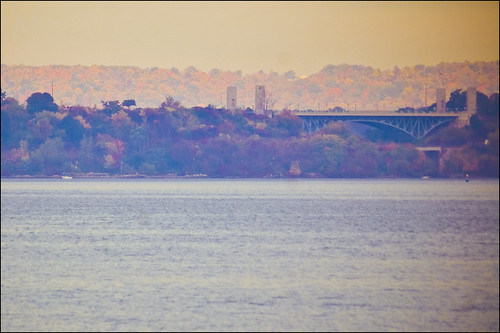
Hamilton West Harbour - Burlington Heights - High Level Bridge
NORTH ...
Hamilton West Harbour - Burlington Heights - High Level Bridge
Talks Update, January 28, 2009
Representatives of the Haudenosaunee Six Nations (HSN), Government of Canada, and the Government of Ontario entered the first round of discussions January 28th at the Oneida Business Park. The Wednesday afternoon meeting opened with a preliminary consultation to discuss Canada’s December 12, 2007 $26 million dollar offer to settle historical grievances on the Welland Canal Claim. Haudenosaunee Six Nations principal negotiator Chief Allen MacNaughton responded to the proposed offer by reading the August 29, 2008 counter proposal letter to Canada’s 26 million dollar offer. Canada’s principal negotiator Ronald Doering responded to the Haudenosaunee Six Nations counter proposal communicating Canada feels it represented a fair offer of compensation for the Welland Canada Flooding and they [Canada] remains hopeful that the Haudenosaunee Six Nations will find some basis for moving forward. The Haudenosaunee Six Nations believe that compensation factor(s) for the Welland Canal flooding of 1829 and subsequent loss of the use of the land does not reflect in Canada’s current offer. Six Nations has estimated the true dollar amount of the Welland Canal Claim is more in the range of five hundred million to one billion dollars. The Haudenosaunee Six Nations is prepared to move forward with negotiations, focusing on land and perpetual care and maintenance for Six Nations. All parties agreed to meet on February 25, 2009 at the Oneida Business Park at 10:00 a.m. for a Lands Resolution Table Meeting. Canada will give its position papers on the Nathan Gage Claim and the Hamilton Port Dover Road Bed.Ah! The Plank Road (bed). This will be interesting. http://www.sixnations.ca/LandsResources/cslc5.htm http://www.hsnnegotiations.com/index.html HAMILTON-PORT DOVER PLANK ROAD (HWY 6) SOUTH ...
Port Dover
Friday the 13th
NORTH ...
Hamilton West Harbour - Burlington Heights - High Level Bridge
Subscribe to:
Posts (Atom)
Two Row Wampum Treaty

"It is said that, each nation shall stay in their own vessels, and travel the river side by side. Further, it is said, that neither nation will try to steer the vessel of the other." This is a treaty among Indigenous Nations, and with Canada. This is the true nature of our relationships with Indigenous Nations of 'Kanata'.
